
3 Best Duvet Cover Sets for Different Fabrics in 2026
We may earn a commission from some links on this page.

The short answer
Choose Remi percale for a larger 96 × 94-inch Full/Queen cover, cotton sateen for a 90 × 92-inch cover with shams, or viscose for that same cover cut in another fiber. Every insert is sold separately.
Egyptian Linens Remi percale set, Full/Queen gray/white
A larger 96 × 94-inch cut; check your insert, which is sold separately.
Last updated October 31, 2026
Contents32
- #1. Egyptian Linens Remi percale set, Full/Queen gray/white: Crisp cotton cover set
- #2. Egyptian Linens 600 sateen duvet set, Full/Queen white: Smooth cotton sateen cover
- #3. Egyptian Linens viscose duvet set, Full/Queen white: Bamboo-viscose cover
- Factors to consider when choosing a duvet cover
- Matching your duvet insert to the cover
- Comparing duvet cover dimensions
- Understanding duvet cover pack contents
- Choosing your duvet cover fabric
- Fasteners and internal ties for duvet covers
- Using attachment points versus duvet loops
- Caring for your duvet cover
- Organizing two duvet cover sets
- Changing your duvet cover
- Shopping checklist for duvet covers
- Duvet cover scenarios: guest room
- Duvet cover scenarios: children's room
- Duvet covers and bedroom aesthetics
- Duvet cover material and tactile feel
- The importance of precise measurements
- Navigating square versus rectangular duvet covers
- Understanding thread count in cotton duvet covers
- Considering the overall value of duvet cover sets
- The role of color in duvet cover selection
- Duvet cover care for longevity
- Ease of changing the duvet cover
- Duvet cover maintenance and cleaning schedule
- Matching duvet covers with existing bedding
- How we picked the best duvet cover options
- More in this guide
- Related bedding choices
- Frequently asked questions
- Verdict on best duvet cover
Our top 3 picks: best duvet cover
 1Crisp cotton cover setEgyptian Linens Remi percale set, Full/Queen gray/whiteEgyptian Linens Remi percale set, Full/Queen gray/white
- Full/Queen cover: 96 × 94 inches
- Cotton percale; zipper and corner ties
- Cover plus four standard pillowcases
- Keep in mind:A larger 96 × 94-inch cut; check your insert, which is sold separately.
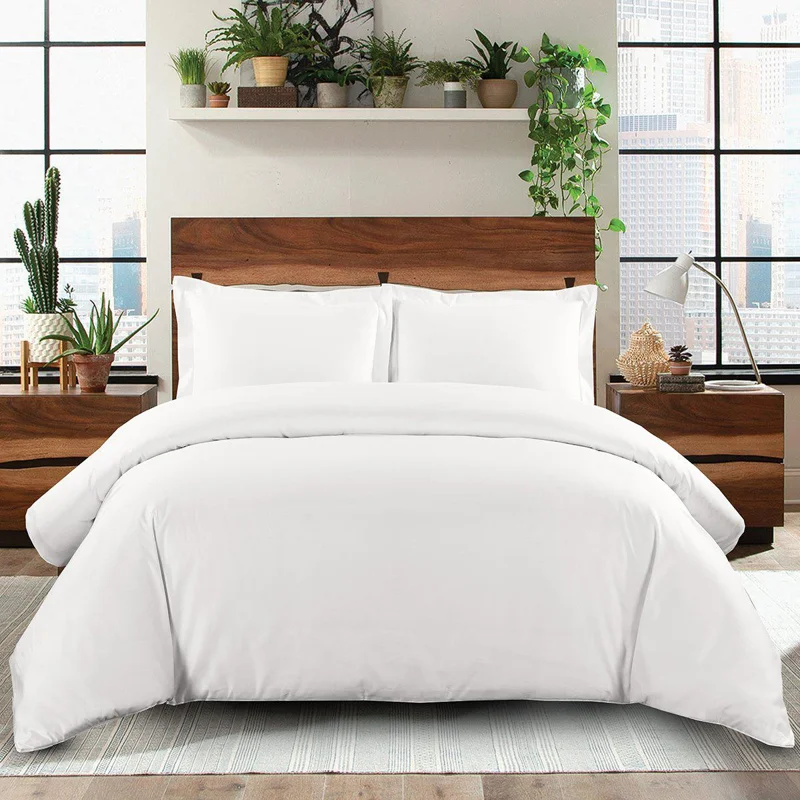 2Smooth cotton sateen coverEgyptian Linens 600 sateen duvet set, Full/Queen whiteEgyptian Linens 600 sateen duvet set, Full/Queen white
- Full/Queen cover: 90 × 92 inches
- Cover plus two standard shams
- Insert sold separately
- Keep in mind:A thread count is not a cooling or durability test.
 3Bamboo-viscose coverEgyptian Linens viscose duvet set, Full/Queen whiteEgyptian Linens viscose duvet set, Full/Queen white
- Full/Queen cover: 90 × 92 inches
- Cover plus two standard shams
- Insert sold separately
- Keep in mind:Not cotton; follow the cold delicate-wash care.
Choose Remi percale for a larger 96 × 94-inch Full/Queen cover, cotton sateen for a 90 × 92-inch cover with shams, or viscose for that same cover cut in another fiber. Every insert is sold separately.
We compared the selected maker specifications, variant sizes and care requirements.
#1. Egyptian Linens Remi percale set, Full/Queen gray/white: Crisp cotton cover set
Egyptian Linens Remi percale set, Full/Queen gray/white Egyptian Linens Remi percale set, Full/Queen gray/white
Our verdict:
Crisp cotton cover set
The reversible gray-and-white cotton-percale cover measures 96 × 94 inches in Full/Queen.
Keep in mind: A larger 96 × 94-inch cut; check your insert, which is sold separately.
Check price at Egyptian Linens- Full/Queen cover: 96 × 94 inches
- Cotton percale; zipper and corner ties
- Cover plus four standard pillowcases
The reversible gray-and-white cotton-percale cover measures 96 × 94 inches in Full/Queen. Four 20 × 28-inch standard pillowcases come with it; the filled insert is separate. A foot-end zipper and inner corner ties are the stated closures. This cover is wider than the other two picks, so choose by the actual insert measurements rather than the shared Full/Queen name.
#2. Egyptian Linens 600 sateen duvet set, Full/Queen white: Smooth cotton sateen cover
Egyptian Linens 600 sateen duvet set, Full/Queen white Egyptian Linens 600 sateen duvet set, Full/Queen white
Our verdict:
Smooth cotton sateen cover
This Full/Queen cotton-sateen cover measures 90 × 92 inches and comes with two 20 × 26-inch shams.
Keep in mind: A thread count is not a cooling or durability test.
Check price at Egyptian Linens- Full/Queen cover: 90 × 92 inches
- Cover plus two standard shams
- Insert sold separately
This Full/Queen cotton-sateen cover measures 90 × 92 inches and comes with two 20 × 26-inch shams. It has a hidden button closure and the insert is sold separately. Choose the sateen surface if that is your preference; the thread-count label does not prove a better sleep result.
#3. Egyptian Linens viscose duvet set, Full/Queen white: Bamboo-viscose cover
Egyptian Linens viscose duvet set, Full/Queen white Egyptian Linens viscose duvet set, Full/Queen white
Our verdict:
Bamboo-viscose cover
The cover is 100% bamboo viscose, with a button closure at the foot.
Keep in mind: Not cotton; follow the cold delicate-wash care.
Check price at Egyptian Linens- Full/Queen cover: 90 × 92 inches
- Cover plus two standard shams
- Insert sold separately
The cover is 100% bamboo viscose, with a button closure at the foot. The Full/Queen pack contains a 90 × 92-inch cover and two 20 × 26-inch shams, with no insert. The stated care is cold delicate washing, mild detergent, no bleach and low tumble drying. Its fiber description is not proof of antibacterial or cooling performance.
Factors to consider when choosing a duvet cover
Start by measuring your duvet insert. Get its exact width and length. Do not guess the size name. An oversized cover will sag.
A small cover will compress the insert. Write these numbers down. Compare them to the cover's listed dimensions. This is your first and most important step.
Choose between the listed cotton percale, cotton sateen and bamboo-viscose fabrics. Compare their actual surface and care instructions after the dimensions fit your insert.
Think about how each feels to the touch. This choice affects your sleeping experience. It also impacts the overall look of your bed. The fabric influences care routines.
Always check the care label before buying.
Decide what comes in the pack. Some duvet covers are sold alone. Others include matching shams. If you need shams, a set puts the pieces together.
If you own useful shams, a cover-only option avoids extra pieces.
Check the exact pack list rather than the dressed-bed photo. That photo may show sheets, a bed throw and several pillows. It does not tell you which pieces arrive. Write your needed pieces beside the included list.
Leave out items that you already own and can still use.
Matching your duvet insert to the cover
Your duvet insert has its own finished size. Duvet covers do too. Read each label in the same width-by-length order. Do not borrow the mattress size as the insert size.
A queen name can cover several measurements.
For a close match, compare the actual numbers on the two items. Ask whether the stated cover dimensions are before or after the permitted wash. If the chart does not say, leave that point open. Do not add a guessed shrink allowance to one item.
Egyptian Linens 600 sateen duvet set, Full/Queen white lists Full/Queen cover: 90 × 92 inches; Cover plus two standard shams; Insert sold separately. A thread count is not a cooling or durability test.
Egyptian Linens Remi percale set, Full/Queen gray/white lists Full/Queen cover: 96 × 94 inches; Cotton percale; zipper and corner ties; Cover plus four standard pillowcases. A larger 96 × 94-inch cut; check your insert, which is sold separately.
A smaller insert leaves extra fabric around it. A larger insert has to fit inside a smaller space. Those are fit differences, not measured warmth results. Decide how much loose fabric you accept.
Ask the maker when the labels do not give a clear match.
Ties cannot change the dimensions of either piece. They join particular points. They do not resize the filled shell or remove spare cover width. Match the broad shape first.
Then use the attachment layout to choose between covers that already make sense.
Comparing duvet cover dimensions
The selected Remi cover is 96 × 94 inches; the other two covers are 90 × 92 inches. Compare those actual cuts with the insert before choosing the amount of spare fabric.
A matching label is not a test of how much the insert moves.
Egyptian Linens viscose duvet set, Full/Queen white lists Full/Queen cover: 90 × 92 inches; Cover plus two standard shams; Insert sold separately. Not cotton; follow the cold delicate-wash care.
Do not assume sizes based on other brands. Verify every dimension.
Understanding duvet cover pack contents
This is a good option if you already have shams or prefer to buy them separately.
Choose Remi percale for a larger 96 × 94-inch Full/Queen cover, cotton sateen for a 90 × 92-inch cover with shams, or viscose for that same cover cut in another fiber. Every insert is sold separately.
You can choose shams from a different brand or fabric. This gives flexibility in design.
This set simplifies buying bedding. It is a complete top-of-bed solution, excluding the insert.
Choosing your duvet cover fabric
This weave can give a smooth surface. It often has a slight sheen. Cotton is a familiar choice for many bedding buyers.
It offers a unique feel for your bedding. Consider if you prefer this fiber type.
The product name 'Signature' suggests a specific style. Check the manufacturer's description for more details on the cotton type and weave.
Fasteners and internal ties for duvet covers
Button closures are usually hidden along one edge of the cover. This keeps them out of sight. They provide a secure closure.
Zippers offer a continuous seal along the opening. This can keep the insert fully enclosed.
Count your insert's loops and note their positions.
More points on a cover do not help where the insert has nothing to attach. Nor does a listed count show a measured grip result. We have no comparison of movement after a night's use. Choose the layout you can match and manage.
Leave any unmatched point unused as the maker directs.
Using attachment points versus duvet loops
Open your current cover and look at the insert. Some inserts have corner loops; others have no loops at all. Note what yours actually has. Do not assume that the next insert will share that layout.
Compare the positions, not only the count.
You can sketch a rectangle and mark the actual loops. Put the opening edge of the cover at the foot of that sketch. This makes it easier to compare an extra side attachment. Do not sew new loops onto a filled item without the maker's guidance.
A missing loop is a selection limit, not a defect to fix by guesswork.
Caring for your duvet cover
For Egyptian Linens Remi percale set, Full/Queen gray/white, keep this limit with the care instructions: A larger 96 × 94-inch cut; check your insert, which is sold separately. Read the delivered label for the full cleaning procedure.
Following these instructions helps maintain the fabric. It can also help prevent shrinking or damage.
For Egyptian Linens 600 sateen duvet set, Full/Queen white, keep this limit with the care instructions: A thread count is not a cooling or durability test. Read the delivered label for the full cleaning procedure.
Proper care extends the life of your cover.
For Egyptian Linens viscose duvet set, Full/Queen white, keep this limit with the care instructions: Not cotton; follow the cold delicate-wash care. Read the delivered label for the full cleaning procedure.
Do not assume care based on other cotton items. Following the specific instructions helps keep the fabric in good condition.
Organizing two duvet cover sets
A spare cover lets you remake the bed while laundry dries. It does not prove a longer life for either cover. Check whether you have space to keep the spare dry. You may prefer one spare cover to another whole set.
Keep its size label with it so you can find the right piece.
When storing a set, fold the cover and shams neatly together. Keep them in a linen closet. A fabric storage bag can protect them from dust. Labeling the bag helps you find the right set quickly.
This is especially useful if you have multiple bedding sets for different sizes.
Consider colors and patterns when buying a second set. You might choose a different look for variety. Or, you might want two identical sets for consistent styling. Think about how easily the colors can be mixed and matched.
This helps maintain a cohesive bedroom aesthetic.
Changing your duvet cover
Changing a duvet cover can be tricky. Lay the duvet cover flat on your bed, inside out. Place your duvet insert on top of it. Match the corners of the insert to the corners of the cover.
Secure the internal ties or clips. This is the first step for alignment.
Reach inside the cover at the opening. Grab the top two corners of the insert through the cover. Hold them firmly. Flip the cover right-side out over the insert.
Shake the duvet down gently. The cover will enclose the insert as you flip. This method helps align everything.
Once the cover is right-side out, adjust the corners. Make sure the insert fills all corners of the cover. Fasten the closure buttons or zipper. Give the duvet a final shake.
This distributes the fill evenly. Your bed is now ready with a fresh cover.
Shopping checklist for duvet covers
First, measure your duvet insert's exact width and length. Write these down. This is the most critical measurement. Do not rely on size names alone.
An accurate measurement prevents fit issues. Compare these numbers to the cover's listed dimensions.
Next, compare the actual fibers and weaves: cotton percale, cotton sateen and bamboo viscose. A sample can help you judge the surface, while the written composition and care label identify what you are buying.
A description of feel is not a measured result for your room.
Compare the needed pieces rather than the number of items in the photo.
Fourth, look at the closure type. Choose buttons or a zipper by the task you find easier. Then check the ties against your insert's actual loops. A higher tie count is not a measured hold score.
Confirm the positions before choosing on count alone.
Duvet cover scenarios: guest room
Do not substitute extra heat for the item's actual care instructions.
Guests often appreciate a coordinated look.
Check the steps needed to change the cover between guests. Compare fastening a zipper with doing up separate buttons. Check the ties against the insert's loops too. We have no timed changing trial or measured shift result for these covers.
Duvet cover scenarios: children's room
For a child's room, check the child's bedding needs first. These full/queen picks are not infant bedding recommendations. Do not choose a filled layer from a shopping photograph alone. If the room uses an adult-size bed and insert, confirm those dimensions.
Then choose care that the household can follow.
Consider the colors and patterns. While these specific products offer solid colors, remember that children's rooms can benefit from playful designs. A neutral base, like the white or dove color, can be dressed up with patterned sheets or throw pillows. This allows for versatility.
A duvet cover is a separate outer layer around the insert. It is not a stated waterproof barrier. Check the size and care before choosing one for a child's bed. Internal ties provide connections to matching loops, without a measured result for bunching during sleep.
Duvet covers and bedroom aesthetics
Sateen weave often has a subtle luster.
It offers a modern touch.
Choose a cover that reflects your desired room style.
Duvet cover material and tactile feel
Consider if this familiar texture is what you seek.
Use the stated composition to narrow the choice, then check care and size.
The importance of precise measurements
Do not rely on the bed size name when buying a duvet cover. A 'queen' duvet insert can vary in dimensions between brands. A 'queen' duvet cover can also vary. Always measure your actual duvet insert.
Record its length and width precisely. This avoids buying the wrong size.
Lay out the insert with no cover on it. Measure from seam to seam without pulling the shell tight. Record both sides and the unit used. Then read the cover's size chart in the same order.
The check identifies a mismatch before you buy.
It cannot promise how the finished bed will feel. An old insert may no longer match its original label. If that happens, record the measured and labelled sizes separately. Tell the cover maker which figure you are using.
Do not mix one measurement from the old label with another from the item.
Check both the cover's stated dimensions and your insert's dimensions. For example, if your insert is 90x90 inches and the cover is 92x90 inches, there will be 2 inches of extra width. Decide if this gap is acceptable for your preference. Precision ensures a tailored fit.
Navigating square versus rectangular duvet covers
It creates a balanced look on the bed.
These selected covers are rectangular. Remi is 96 × 94 inches, while the cotton sateen and viscose covers are 90 × 92 inches. Their shared Full/Queen label does not make their cuts identical.
If you have a rectangular insert, choose a rectangular cover that matches its proportions. If you have a square insert, a square cover is often best. However, a slightly wider rectangular cover might still work if you prefer a bit of drape. The key is to match shapes as closely as possible.
Understanding thread count in cotton duvet covers
The cotton-sateen pick is labeled 600 thread count. That identifies its range; it does not establish better sleep, a softer surface for every person or greater durability than a lower count.
Consider this as one factor among many.
Considering the overall value of duvet cover sets
We do not compare these packs on price.
Buying together can reduce separate choices, but it does not prove a saving.
The choice depends on your specific needs. If your existing shams are worn, a set might be beneficial. If your shams are perfectly fine, buying just the cover makes sense. Evaluate what pieces you currently own and what you genuinely need to complete your bed.
The role of color in duvet cover selection
Consider how this shade will interact with your wall color and other decor.
Keep the selected color name with your order so you do not compare a different child by mistake.
The color choice impacts the room's mood.
Duvet cover care for longevity
Ensure you use appropriate detergents. Overloading the washing machine can prevent thorough cleaning and cause wear. Drying on too high a heat can damage fibers. Regular, gentle care keeps your duvet cover looking its best for longer.
This applies to all materials.
Ease of changing the duvet cover
A smooth-gliding zipper is helpful.
Duvet cover maintenance and cleaning schedule
Duvet covers sit around the filled insert. Check them when you change the bed. Set your wash routine by use, soiling and the maker's care label. There is no single wash interval established for these three covers.
A guest bed may need a different routine from your own bed.
Having a second duvet cover set makes regular washing easier. You can simply swap out the dirty cover for a clean one. This avoids leaving your bed without a cover while one is in the laundry. This is especially useful for busy households.
Sort the load as the fabric label and washer manual direct. Check whether the cover's fastenings should be closed before washing. Read the drying instruction separately from the wash setting. A permitted cold wash does not establish a high-heat drying setting.
Keep the cover label separate from the insert label.
Matching duvet covers with existing bedding
When selecting a duvet cover, think about your existing sheets and pillowcases. A neutral color like white, dove, or mineral can often blend with many patterns and colors. This allows for versatility in your bedding ensemble. Consider if you want to mix or match.
If your existing sheets are patterned, a solid-colored duvet cover can provide balance. If your sheets are solid, a duvet cover in a contrasting color or texture can add interest. The duvet cover is a key element in your bed's overall design.
Compare the cover’s surface with the sheets you already like. Cotton percale, cotton sateen and viscose feel different, but the layers do not have to use the same fiber. Check each label and care route separately.
Aim for a cohesive look that reflects your personal style.
How we picked the best duvet cover options
We compared the published specifications for each duvet cover. This included stated dimensions, fabric composition, and included items. We looked at whether the product was a cover only or a set with shams. These details are crucial for making an informed purchase decision.
We examined closure types, such as buttons or zippers. We also noted the presence and number of internal attachment points. Care instructions, when provided, were also compared. These specifications directly impact how you use and maintain the duvet cover.
Our comparison relies solely on the factual information provided by the manufacturers. The information presented helps you understand the differences in features. Use these facts to match a product to your specific needs.
More in this guide
Related bedding choices
If you need a filled layer as well as a cover, compare our comforter picks. The lightweight guide separates lifting effort from warmth and wash bulk. For fewer layers, read the hot-sleeper comparison. None claims a measured cooling result.
Frequently asked questions
What is the primary purpose of a duvet cover?
A duvet cover is the removable shell around a filled insert. It lets you change the outer fabric without buying another filled layer. The cover and insert keep separate care instructions. You may wash the cover on its own, as its label permits.
That does not mean the insert will never need cleaning.
How do I ensure a duvet cover fits my duvet insert correctly?
Measure your insert's width and length. Compare them with the cover's stated dimensions in the same units. Do not rely on a queen size name. This checks the size pairing, without proving a shift or warmth result. Check the attachment layout separately.
What is the difference between a duvet cover with buttons and one with a zipper?
Duvet covers with buttons feature a series of buttons along the opening. These provide a traditional, often hidden closure. Zipper closures use a continuous zipper for faster opening and closing. Zippers can offer a more seamless look when hidden.
Both types close the cover's opening. Neither closure supplies a measured result for movement inside the cover. Choose the fastening task you prefer.
Why do some duvet covers have internal ties or attachment points?
Internal ties connect to matching loops on the insert shell. They may sit at the corners or along the sides. Check both layouts before choosing by count.
Verdict on best duvet cover
Match the cover cut to the insert, then choose cotton percale, cotton sateen or bamboo viscose by the surface and care you prefer. The selected kits contain either four pillowcases or two shams, and every insert is separate.
Each product offers specific features that cater to different preferences. Always verify the exact size and contents before purchasing. This guide helps you compare these details for an informed decision.
Explore the original datasets and sourced findings in our sleep research.
Our picks in this topic

3 picks
3 Picks for the Best Comforter for Hot Sleepers in 2026
Best comforter for hot sleepers: compare the selected sizes, materials and care trade-offs.

3 picks
3 Best Comforter Picks for Fit and Care in 2026
Best comforter: compare the selected sizes, materials and care trade-offs.

3 picks
3 Best Lightweight Comforter Picks in 2026
Best lightweight comforter: compare the selected sizes, materials and care trade-offs.