
3 Best Sheets for Fit and Everyday Care in 2026
We may earn a commission from some links on this page.

The short answer
Choose cotton sateen for a smooth cotton set, extra-deep percale for a crisp surface and taller bed, or viscose twill for a silkier fabric. Match the pocket to your total mattress height.
Royal Tradition 300 cotton sateen, Queen gray
15-inch pocket; measure the topper as part of the mattress height.
Last updated October 31, 2026
Contents16
- #1. Royal Tradition 300 cotton sateen, Queen gray: Cotton sateen set
- #2. Abripedic 300 percale extra-deep set, Queen white: Crisp cotton; deeper pocket
- #3. Egyptian Linens bamboo-viscose twill, Queen white: Smooth viscose twill
- Factors to consider when choosing the best sheets
- Best sheets: start with the job you need done
- Measure before choosing a set
- Choose fabric by the surface you like
- Read the specification beside the marketing
- Match the care to your home
- Finish the rest of the bed
- Before you order: a short comparison worksheet
- How we picked the best sheets
- Sleep data, with the source limits visible
- More in this guide
- Frequently asked questions
- Verdict on the best sheets for your bed
Our top 3 picks: best sheets
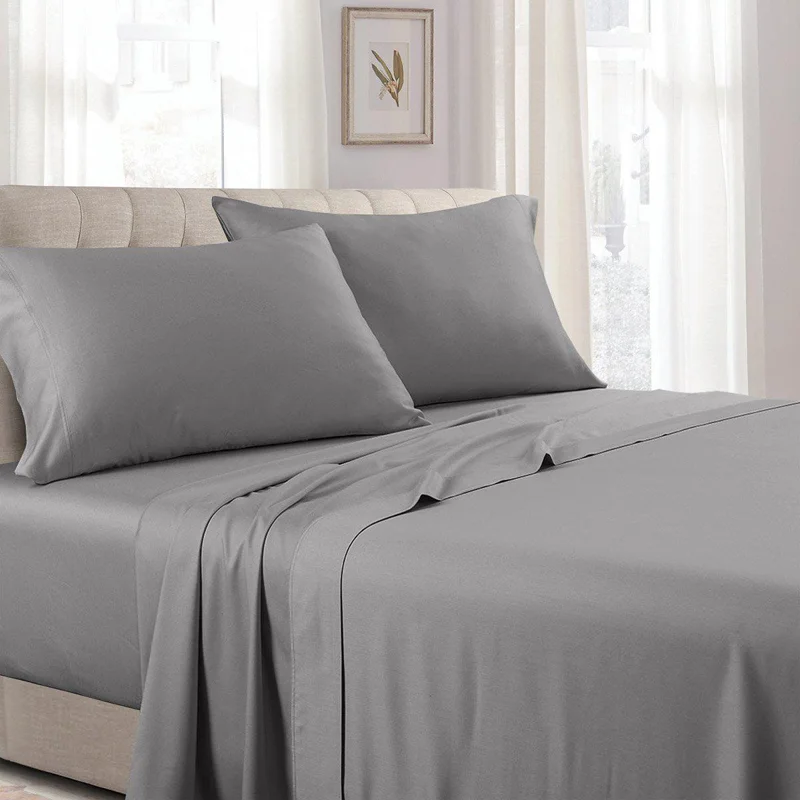 1Cotton sateen setRoyal Tradition 300 cotton sateen, Queen grayRoyal Tradition 300 cotton sateen, Queen gray
- 100% cotton sateen
- Queen fitted: 60 × 80 inches
- Flat sheet and two cases included
- Keep in mind:15-inch pocket; measure the topper as part of the mattress height.
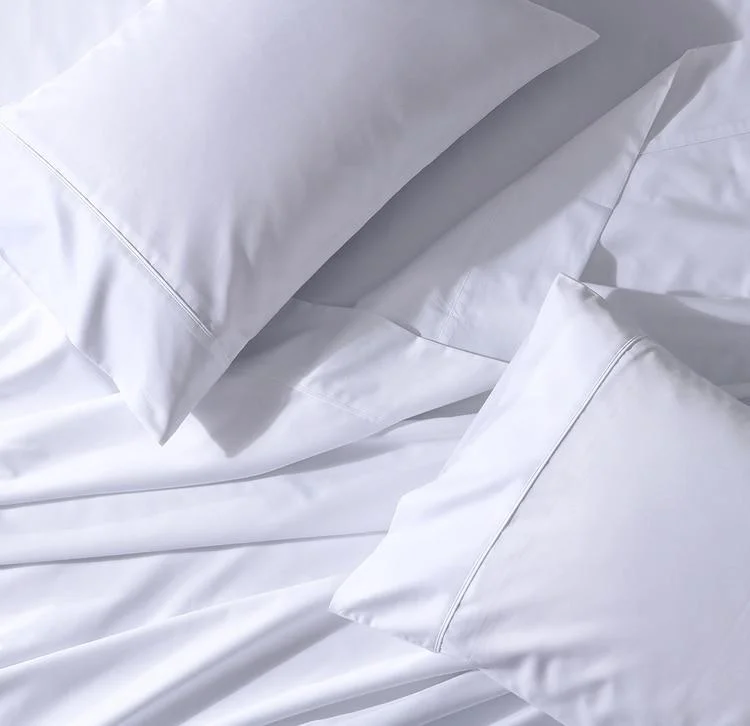 2Crisp cotton; deeper pocketAbripedic 300 percale extra-deep set, Queen whiteAbripedic 300 percale extra-deep set, Queen white
- 100% cotton percale
- Queen fitted: 60 × 80 inches
- 22-inch pocket; 102 × 112-inch flat
- Keep in mind:22-inch pocket can leave spare fabric on a shallow mattress.
 3Smooth viscose twillEgyptian Linens bamboo-viscose twill, Queen whiteEgyptian Linens bamboo-viscose twill, Queen white
- 100% bamboo viscose; twill weave
- Queen fitted: 60 × 80 inches
- Flat sheet and two cases included
- Keep in mind:The page lists a 15-inch pocket and an 18-inch fit claim; confirm borderline heights.
Choose cotton sateen for a smooth cotton set, extra-deep percale for a crisp surface and taller bed, or viscose twill for a silkier fabric. Match the pocket to your total mattress height.
We compared the selected maker specifications, variant sizes and care requirements.
#1. Royal Tradition 300 cotton sateen, Queen gray: Cotton sateen set
Royal Tradition 300 cotton sateen, Queen gray Royal Tradition 300 cotton sateen, Queen gray
Our verdict:
Cotton sateen set
This is the straightforward cotton-sateen choice.
Keep in mind: 15-inch pocket; measure the topper as part of the mattress height.
Check price at Egyptian Linens- 100% cotton sateen
- Queen fitted: 60 × 80 inches
- Flat sheet and two cases included
This is the straightforward cotton-sateen choice. The Queen set includes a 60 × 80-inch fitted sheet, a 92 × 102-inch flat sheet and two 20 × 30-inch cases. The stated pocket depth is 15 inches. Choose it for its fabric and complete set, rather than a promise about wrinkles or sleep quality.
#2. Abripedic 300 percale extra-deep set, Queen white: Crisp cotton; deeper pocket
Abripedic 300 percale extra-deep set, Queen white Abripedic 300 percale extra-deep set, Queen white
Our verdict:
Crisp cotton; deeper pocket
Choose the percale weave if you prefer a matte, crisp cotton surface and need a deeper fitted sheet.
Keep in mind: 22-inch pocket can leave spare fabric on a shallow mattress.
Check price at Egyptian Linens- 100% cotton percale
- Queen fitted: 60 × 80 inches
- 22-inch pocket; 102 × 112-inch flat
Choose the percale weave if you prefer a matte, crisp cotton surface and need a deeper fitted sheet. This Queen set has a 60 × 80-inch fitted piece with a 22-inch pocket, an oversized 102 × 112-inch flat and two 20 × 30-inch cases. Extra fabric is useful only when it matches your bed; it is not a quality score.
#3. Egyptian Linens bamboo-viscose twill, Queen white: Smooth viscose twill
Egyptian Linens bamboo-viscose twill, Queen white Egyptian Linens bamboo-viscose twill, Queen white
Our verdict:
Smooth viscose twill
The fiber is viscose made from bamboo, not unprocessed bamboo fiber.
Keep in mind: The page lists a 15-inch pocket and an 18-inch fit claim; confirm borderline heights.
Check price at Egyptian Linens- 100% bamboo viscose; twill weave
- Queen fitted: 60 × 80 inches
- Flat sheet and two cases included
The fiber is viscose made from bamboo, not unprocessed bamboo fiber. The Queen set contains a 60 × 80-inch fitted sheet, a 92 × 102-inch flat and two 20 × 30-inch cases. The merchant describes a 15-inch pocket while also claiming fit up to 18 inches; confirm the fit before ordering for a bed near either limit. Its cooling language is not a temperature result from us.
Factors to consider when choosing the best sheets
Measure the mattress with any topper in place. Choose the fiber and fabric construction you prefer, then check the exact sheet's care label. Read the set's included-pieces list and the finished dimensions. A larger thread count doesn't settle quality.
A cooling name doesn't prove a result in your bedroom.
Best sheets: start with the job you need done
| Your question | Start here | What you'll be able to check |
|---|---|---|
| Fit around the mattress | Sheet size reference | Footprint and total mattress height |
| Fabric feel | Sheet materials | Fiber versus fabric construction |
| Crisp or smooth cotton | Percale versus sateen | Texture and care trade-offs |
| Reading the count | Thread count | What the count leaves out |
| Choosing the pieces | Flat versus fitted | The job of each layer |
| Caring for the set | Washing sheets | Label-first sorting and drying |
Scroll for more →
We rank these choices by their stated use and limits. A material description can help you choose a type of fabric. It cannot establish how every named product will perform.
Measure before choosing a set
Write down your mattress width and length. Then measure its full height with the topper and protector in place. Compare all three with the fitted sheet's intended mattress size and height limit. A queen label alone doesn't establish the fit.
Read flat-sheet dimensions separately. The width determines side coverage; the length must suit where you place the upper edge and how much you tuck at the foot. A mattress chart doesn't give a universal finished flat-sheet size.
Take a twin XL bed as an example. Its extra length is easy to miss on a short pack name. A regular twin fitted sheet isn't a match just because both names say twin. Check the length in the chart.
Then check the height limit with the topper still on the bed.
Check pillowcase dimensions against the pillows you own. A set's king label may also describe king cases, which can leave spare fabric around a shorter pillow. The pillow size reference explains the common names and why actual model measurements still matter.
For split or adjustable beds, confirm the actual mattress layout. Two fitted pieces are different from a single large sheet. Follow the base and mattress instructions for clearance around movement, rather than adding straps wherever a corner comes loose.
Choose fabric by the surface you like
Fiber tells you what the sheet contains. Construction tells you how yarns form the fabric. Cotton percale and cotton sateen share a fiber but have different surfaces. Linen names flax fiber; jersey names a knit.
Those terms aren't points on one quality scale.
If you prefer a crisp, matte surface, read what percale means. If you like a smoother face with more sheen, compare it with sateen. Handle a sample where possible, and check return terms if you can't judge the texture before ordering.
Read the fiber percentages on a blend. A plant name on the front of the pack may not be the final fiber name. The FTC's bamboo textile guidance explains why rayon made from bamboo needs a different description from actual bamboo fiber.
Don't turn a fabric name into a promise of cooling, allergy relief or better sleep. The rest of the bed and the room still matter. We don't diagnose sleep problems or treat a sheet purchase as a medical answer.
Read the specification beside the marketing
Thread count describes yarns in a stated area. It doesn't tell you every part of softness or fit. Nor does it predict wear. Compare it alongside fiber and construction, rather than choosing the largest number in a search result.
Check the exact size and color variant's details. A twin pack can contain a different number of cases from a queen pack. Decorative cushions and throws in a photograph may be separate purchases. Use the written contents list to decide what you're buying.
If a certification matters to your choice, find its scope and current record. A label may concern the fiber source or the finished item. It can also relate to a processing step. It doesn't automatically prove every environmental or sleep-related claim attached to the listing.
Where a needed measurement or claim is missing, treat it as unknown. Ask the maker rather than filling it in with a generic chart or a guess. A clear limitation is more useful than an unsupported benefit.
Match the care to your home
Read the wash and drying labels before buying. A white sheet doesn't automatically accept bleach, and pure cotton doesn't mean every finish takes the same heat. The fitted elastic also needs the care the maker specifies.
Think about your largest wash item and the space it needs in the drum. A load should meet both the fabric label and your appliance manual. More detergent or extra heat can't make up for a crowded machine.
After washing, check tangled corners for dampness. Fold only when the whole sheet is dry. Our folding method starts with fitted-corner seams, and the storage checklist keeps complete sets easy to find.
If you want a pressed finish, read how hotel-style finishing differs from home laundry. A neat hotel photograph doesn't establish a process you can copy with any fabric or dryer.
Finish the rest of the bed
The sheet is only one part of the setup. A duvet cover needs to match the insert's dimensions, while the filled layer has its own care label. Use the cover fitting guide before choosing by color alone.
For more side coverage, work out the drop rather than going up a size by guesswork. The king comforter on a queen bed check uses a transparent width calculation. The comforter chart shows one maker's measurements without presenting them as a universal standard.
Pillows need their own care route. A washable case doesn't make a foam core washable. Read how to wash pillows or the separate down pillow instructions before wetting the filled item.
If you are setting up a spare room, use the guest-room bedding checklist. It focuses on a complete, easy-to-reset bed and a clean spare set, without assuming every guest wants the same layers.
Before you order: a short comparison worksheet
Keep one row for each exact size variant you are comparing. Write down the mattress footprint it fits, the maximum mattress height and the number of included pieces. Add the fiber percentages and fabric construction. Save the care instructions beside those details, rather than relying on a remembered product name.
Use a separate column for anything you still need to confirm. A missing pocket limit is a question for the maker. A missing case size is a reason to check before buying an extra pillow. Don't fill either gap with a measurement from a different range.
Decide which facts are requirements for your home. If your laundry space cannot handle the permitted care, set that option aside. If you need two separate fitted sheets, a one-piece set isn't a match just because the overall bed width is right. This keeps a favorable fabric description from hiding a practical mismatch.
Check the delivered labels against that saved specification before washing. If the contents or dimensions differ, contact the seller through the order route. Keep your question specific: identify the piece, stated measurement and the label you received. You don't need to infer a fabric's quality from a star rating to notice that a set has the wrong pieces.
How we picked the best sheets
We compared the selected Queen variants, included pieces, fabric construction and care. The choices separate cotton sateen, extra-deep cotton percale and viscose twill; their labels are not scores from a sleep trial.
The cards identify exact queen sets from the stated product specifications. We leave a performance claim out when we cannot confirm it. A maker's test claim does not become our own test result.
Use the sources beside the picks to check the current size and label before ordering.
Sleep data, with the source limits visible
Our sleep research uses public US datasets. The county report keeps modeled estimates and their intervals together. The NHIS report examines duration and feeling rested on the same adult records, with survey weights and uncertainty.
These data describe populations. They don't show that a particular bedding material causes a sleep result. Downloads and methods sit beside the findings so you can check the basis for a number before citing it.
More in this guide
Frequently asked questions
What should I check first when buying sheets?
Start with mattress width, length and total height through any topper. Then check the fitted-sheet limit and the other pieces' dimensions. After fit is clear, compare fabric and care. A strong material claim or a large count is little help if the sheet can't fit the bed.
Is a full set always necessary?
No. Buy the pieces you actually use. A fitted sheet, top sheet and cases do different jobs, and pack contents vary. Read the written list for the exact variant.
Don't assume the display bed shows only included items, or that every set has the same number of cases.
Do you test products in a sleep lab?
No. Our guides use published specifications and identifiable sources. Where a product detail isn't established, we leave it unknown.
Our editorial method explains how we handle sources, corrections and limits.
Can bedding statistics choose a sheet for me?
Population sleep data can't identify the right fabric for your bed. Survey answers and modeled local estimates have their own definitions and limits. Use them for the question they measure. Choose bedding by its dimensions and specifications, without treating a county statistic as proof of a product benefit.
What if two sets look almost identical?
Compare the written specifications for the exact variants. Similar photos can hide different pocket limits, fiber mixes or case counts. Check those facts before deciding on appearance. If both meet your requirements, use the feel and care you prefer rather than inventing a quality difference from the photograph alone.
Should I replace every piece at the same time?
You can replace the pieces you need if the dimensions and care still work together. Measure the remaining pillows and bedding first. A replacement fitted sheet doesn't have to share a range name with the top sheet. Keep the actual specification so you can check compatibility without relying on color alone.
Verdict on the best sheets for your bed
The best sheets meet a clear fit check and suit the feel and care you want. Begin with the dimensions, then compare the fabric. Keep a record of the specification so the next replacement is easier to match. Use the glossary if a label term is unclear.
Our picks in this topic

3 picks
3 Best Deep Pocket Sheets for Measured Beds in 2026
Best deep pocket sheets: compare the selected sizes, materials and care trade-offs.

3 picks
3 Best Sheets for Hot Sleepers: Fabric Choices in 2026
Best sheets for hot sleepers: compare the selected sizes, materials and care trade-offs.

3 picks
3 Best Sheets That Don't Pill: Claims and Limits in 2026
Best sheets that don't pill: compare the selected sizes, materials and care trade-offs.
3 picks
3 Best Sheets for Adjustable Beds in 2026
Best sheets for adjustable beds: compare the selected sizes, materials and care trade-offs.

3 picks
3 Best Sheets for Airbnb Turnover Routines in 2026
Best sheets for airbnb: compare the selected sizes, materials and care trade-offs.
3 picks
3 Best Twin XL Sheets for Fit and Care in 2026
Best twin xl sheets: compare the selected sizes, materials and care trade-offs.

3 picks
3 Best Wrinkle Free Sheets: Choices and Care in 2026
Best wrinkle free sheets: compare the selected sizes, materials and care trade-offs.