
Best thread count for sheets: what the number misses
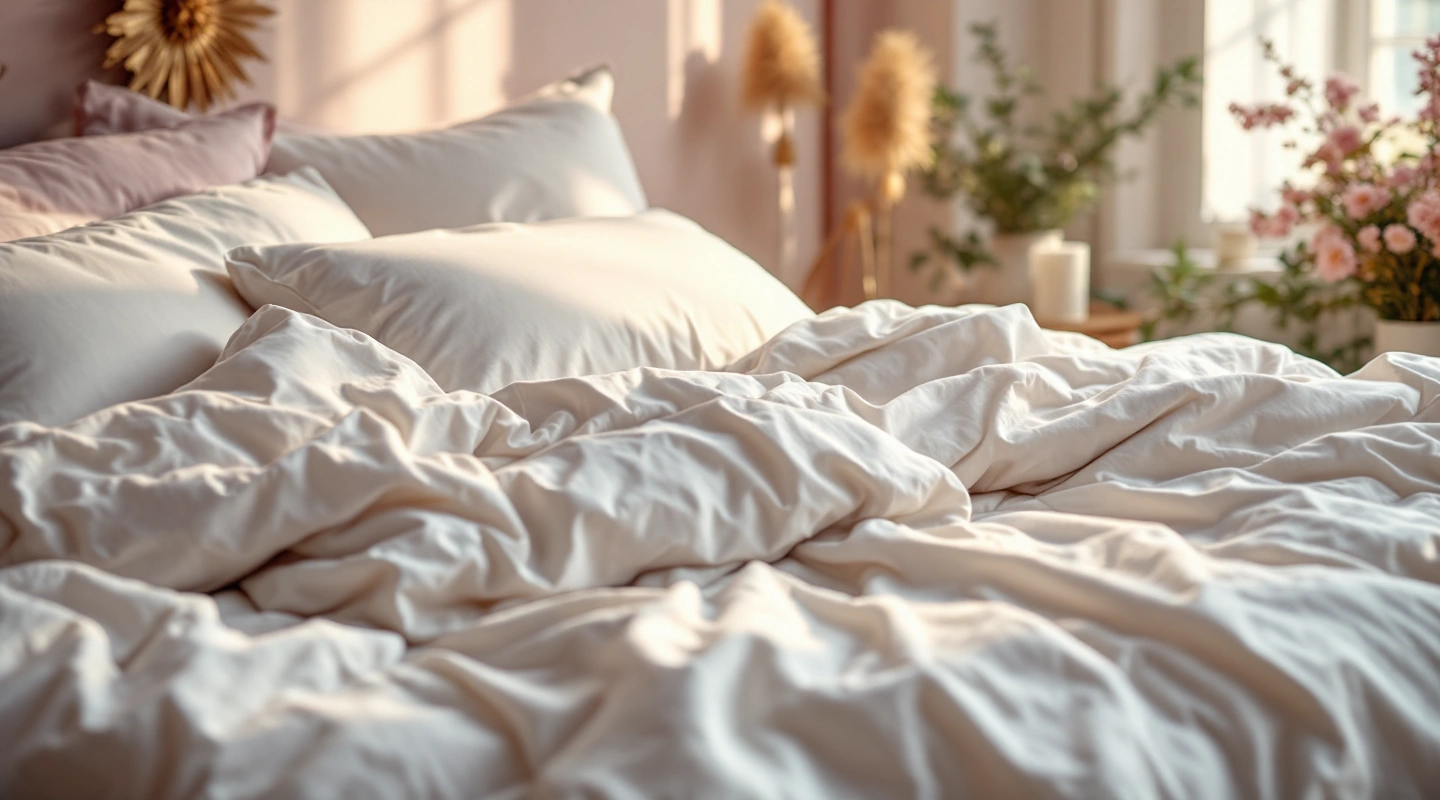
Understand what yarn count measures and what it leaves out of a sheet specification.
Last updated October 2026
Contents10
- Best thread count for sheets: what the number counts
- Read ply and fiber beside the count
- Compare like fabrics
- Read a real specification in order
- Don't treat count as a cooling test
- Choose by the feel you can accept
- Check fit and care before the final choice
- More in this guide
- Frequently asked questions
- Verdict on the best thread count for sheets
The best thread count for sheets isn't a single number that works for every fabric. Use it as one part of a specification, alongside fiber and construction. A high count can't tell you whether the sheet fits, how it feels or what wash method it needs.
Thread count measures yarns running in both directions in a square inch of fabric. Compare it only alongside the fiber, fabric construction and way the maker counts yarns. A larger number doesn't settle quality or cooling. Check the actual feel where possible, then the finished dimensions and care label. Don't use the number to compare a knit with a flat fabric.
Best thread count for sheets: what the number counts
Think of a square inch of fabric with yarns running across it and up it. Thread count adds the two directions. That arithmetic describes yarn density, not every feature of the finished sheet.
For a simple worked example, 100 yarns in one direction plus 100 in the other gives 200. This is an explanation of the measure, not a recommended count. It doesn't specify the thickness of each yarn or the fiber used.
The Company Store FAQ defines thread count by the number of threads in a square inch. CottonWorks also explains why count alone doesn't settle satisfaction with sheets.
Read ply and fiber beside the count
Ply refers to strands twisted together into a yarn. Don't assume every advertised count uses the same counting basis. If a large number is the main selling point, ask how it was measured and whether it describes single- or multi-ply yarn.
The fiber label answers a different question: what the yarn contains. A cotton count and a polyester count don't make two otherwise identical fabrics. Yarn quality and the finish also need attention.
Don't pay for a large printed number while accepting unknown composition. A listing should tell you the fiber percentages and the construction, along with the dimensions. If those details are absent, the count doesn't fill the gap.
Compare like fabrics
Percale and sateen arrange yarns differently. A count on one doesn't tell you how it will feel beside the other. Percale generally has a crisp, matte character. Sateen has longer yarn runs on its face and a smoother look.
You can compare two named cotton percale sheets more usefully than a percale with an unrelated knit. Even then, the count is only one input. A sample or a clear return policy may matter more if texture is your main concern.
Jersey is knitted. Linen often uses a different way to describe fabric weight. Don't force every sheet into a thread-count contest when the construction calls for a different measure. Our material guide separates the terms.
Read a real specification in order
| Field | What it answers |
|---|---|
| Fiber percentages | What the fabric contains |
| Construction | How the yarns form the fabric |
| Thread count, if given | The stated yarn-count measure |
| Finished dimensions | Which mattress and pillows it fits |
| Pocket limit | The mattress height the fitted sheet accepts |
| Care label | How you can wash and finish it |
Scroll for more →
Check the exact size variant. A twin set may have a different number of pillowcases from a queen set. The thread count can't tell you the pack contents, and the display photograph may show pieces sold separately.
Save the specification for the item you order. A broad range description can change later or cover several fabrics. If the delivered label differs from the listing, ask the seller to resolve the mismatch before washing.
Don't treat count as a cooling test
A denser yarn count is not a measured bedroom temperature result. The mattress surface and protector affect the whole bed. So do the filled layers above the sheet. A fabric number doesn't isolate those effects.
Likewise, don't infer a guaranteed service life from a count. Wear depends on the item and its use. The number doesn't describe every seam or the strength of the elastic around a fitted sheet.
Check the maker's actual performance evidence if a claim matters to you. A vague cool or luxury label isn't a documented comparison under stated conditions. If the evidence isn't available, leave the claim unproven.
Choose by the feel you can accept
Use familiar fabrics as a starting point. If a crisp shirt feels pleasant to you, percale may be worth a closer look. If you prefer a smooth face with some sheen, compare sateen. Neither preference needs a large count to be valid.
If you can handle a sample, check it without assuming a store swatch has had the same care as a new set. Ask about the finish and how the fabric feels after the allowed wash. A return policy still needs its own reading.
Avoid a purchase that relies on a promised transformation after many washes. Choose the stated fabric and terms you can accept now. Don't assume a harsh-feeling sheet will necessarily become the texture you want.
Check fit and care before the final choice
Measure your mattress including any topper. Check the fitted sheet's footprint and pocket limit. A high-count sheet that pops off a corner is still the wrong fit. The size chart explains the distinction.
Read the wash and drying instructions. Don't increase heat to chase a hotel finish unless the label permits it. If wrinkle control matters, choose a fabric and care routine that fit your own equipment.
More in this guide
Frequently asked questions
Is the highest count the softest sheet?
No. Count doesn't include every part of softness, such as yarn, fiber and finish. A smooth sateen and a crisp percale can have different counts and feel different by design. Compare the actual fabric type and your own preference rather than putting all sheets on a single numeric scale.
Does a low count mean poor quality?
Not by itself. Read the full specification and the intended fabric construction. Count alone doesn't tell you about seams, fit or the elastic. Don't reject a sheet solely because a different fabric advertises a larger number. Use a like-for-like comparison with clear fiber and care information.
Can I compare thread count with fabric weight?
They measure different things. Thread count describes yarns in an area; fabric weight describes mass for a stated area. Neither can be converted into the other without more information about the yarn and construction. Check the units and don't compare bare numbers that refer to different measures.
Does thread count replace the fiber label?
No. A number can't tell you what the sheet contains. Read the fiber percentages and any blend description separately. If the listing gives a count but leaves composition unclear, ask the seller before buying. A plant name on the front of the pack is not always the legal fiber name.
Verdict on the best thread count for sheets
The best thread count for sheets is a useful detail within a clear fabric specification. It isn't a universal target. Compare percale and sateen for construction, or use our bedding fit and care guides to finish the choice.
Company Store and CottonWorks definitions linked above explain the count terms. The FTC textile labeling guidance helps you read the fiber claim separately. Our worked count is arithmetic, not a product test or quality rating.