
Best way to fold sheets: fitted and flat methods

Nest fitted corners first, then fold the dry set to fit your shelf.
Last updated October 2026
Contents7
The best way to fold sheets is to bring fitted corners together before trying to make a flat rectangle. Fold flat sheets edge to edge. Use a clean surface, check that the fabric is dry and choose a final size that fits your shelf rather than chasing a perfect display fold.
For a fitted sheet, nest matching corner seams, then bring the pairs together. Lay the bundle down and turn the elastic edges inward to form a rectangle. Fold that rectangle to your shelf size. Flat sheets only need aligned edges and regular folds. Keep the matching cases with the set after everything is dry. A tidy roll is also fine if it suits your storage.
Best way to fold sheets: prepare the space
Use a clean bed, table or other broad surface. Keep the fabric clear of the floor. Check the center and corners for damp patches before you fold. A neat bundle can hide moisture that still needs drying.
Smooth the sheet by hand without stretching its seams. If you want to iron it, check the care label first. Folding isn't a reason to use heat on a finish that doesn't allow it.
Nest the fitted corners
- Hold the sheet at two neighboring corner seams, with the inside facing you.
- Bring one corner over the other so their seams sit together.
- Find the other two corners and pair those in the same way.
- Bring both pairs together, keeping the seams nested.
- Lay the sheet on the surface and tuck the elastic edges inward.
- Smooth the resulting rectangle, then fold it to fit your shelf.
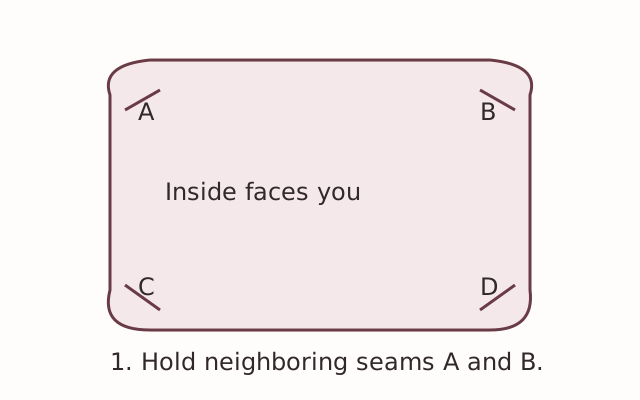
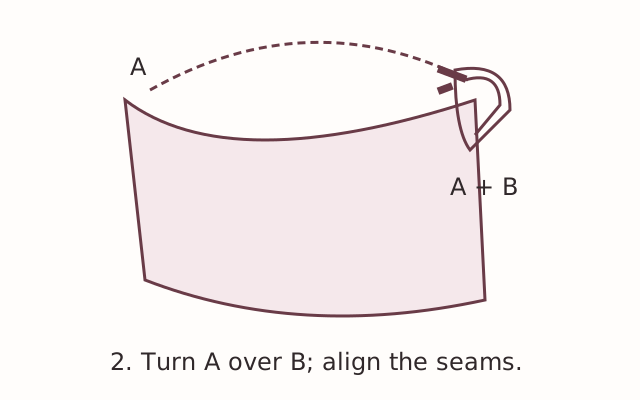
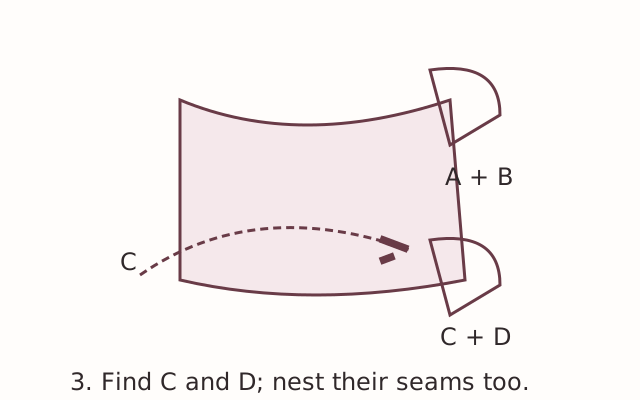
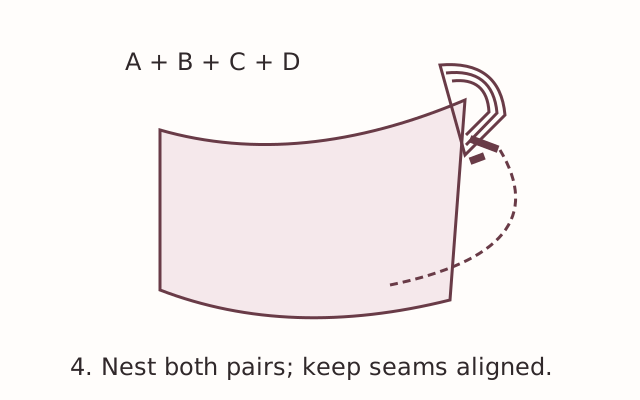
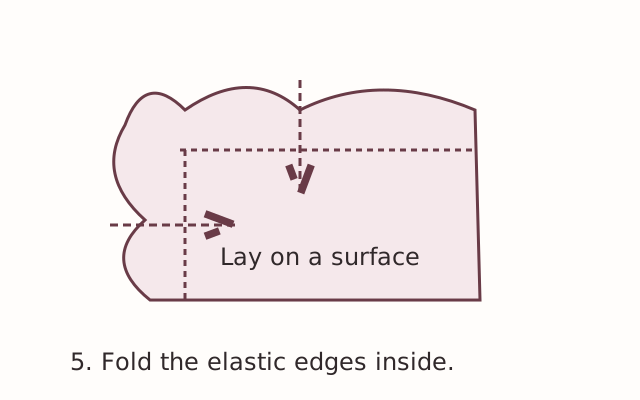
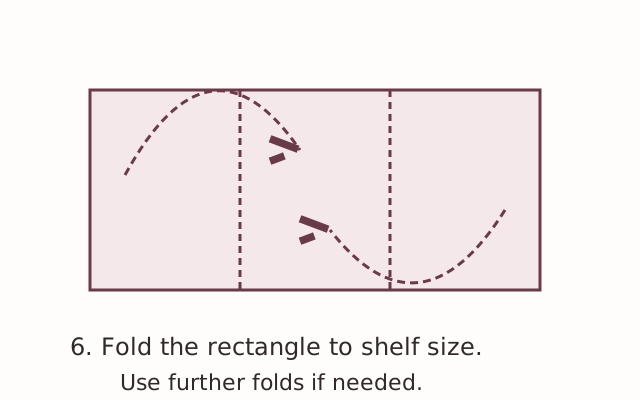
The letters follow the same corner seams through the sequence. The drawings show the fold path; they are not a cutting pattern.
If the sheet twists, stop and identify all four seams again. Pulling harder won't make a crossed pair sit flat. Large pockets may leave a thicker folded edge; that is normal for the cut.
This is a practical corner-nesting method. It doesn't need a special tool. The Home Depot's folding guide gives a primary retailer demonstration to compare with the steps.
Fold a flat sheet
Bring opposite edges together, then align the corners. Smooth the fold on the surface. Repeat across the other direction until you have a rectangle that fits your shelf or basket.
Use the same final width for the fitted and flat sheets if you want them to stack. You don't need the same number of folds. Large and small pieces start at different dimensions.
Keep the set together
Place the folded cases with the sheets, or use one case as a loose outer wrap. Don't force the bundle into a tight case. Leave labels readable if several beds use similar colors.
For a small shelf, a broad roll can work better than a tall stack. It is a storage choice, not a way to remove wrinkles. Our storage checklist covers shelf size and set labels.
More in this guide
Frequently asked questions
Does folding remove every wrinkle?
No. Folding can leave creases, and the fabric's normal appearance still matters. Smooth the sheet before folding and use only the finishing method allowed by the label. You don't need a pressed finish for a useful storage fold. Don't add heat just to imitate a display photograph.
What if the fitted sheet won't make a neat square?
Check that the corner seams are nested in the same direction. Then tuck the elastic edges into a rectangle before folding again. A large pocket creates extra fabric and may leave a thick edge. Use a shelf-sized rectangle or a loose roll rather than forcing a perfect square.
Verdict on the best way to fold sheets
The best way to fold sheets keeps the corners under control and the dry set easy to find. Use the washing guide before folding, or return to bedding care.
The folding sequence is our editorial procedure for handling the sheet's shape. It is not a product test and does not promise a wrinkle-free result.