
3 Best Sheets That Don't Pill: Claims and Limits in 2026
As an Amazon Associate, this website earns from qualifying purchases.

The short answer
Mellanni reports pilling resistance and wash-appearance evidence. California Design Den is a cotton queen choice with stated pilling testing. Texas Linen adds a split-king alternative with a maker resistance claim. Resistance is not a never-pill guarantee; choose the right bed format first.
Last updated October 2026
Contents8
- #1. Mellanni Iconic queen: Reported wear evidence
- #2. California Design Den queen: Tested cotton option
- #3. Texas Linen split king: Separate cotton format
- Factors to consider when choosing the best sheets that don't pill
- How we picked these pilling-focused choices
- More in this guide
- Frequently asked questions
- Verdict on best sheets that don't pill
Our top 3 picks: best sheets that don't pill
- 1Reported wear evidence
 Mellanni Iconic microfiber, queen whiteMellanni Iconic microfiber, queen white
- Listing states pilling resistance
- Reported wash appearance: 50 cycles
- Queen; total height up to 16 inches
- 2Cotton testing
 California Design Den cotton sateen, queenCalifornia Design Den cotton sateen, queen
- Listing reports pilling testing
- Cotton sateen; queen 60 x 80 inches
- No pilling grade supplied here
- 3Split-king alternative
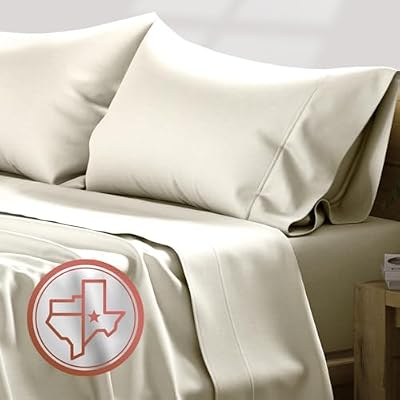 Texas Linen Co. split-king cotton set, ivoryTexas Linen Co. split-king cotton set, ivory
- Maker states pilling resistance
- Two Twin XL fitted sheets
- Depth conflict: confirm 16 vs 18 inches
The best sheets that don't pill need more than a smooth product photo. Mellanni Iconic is our first pick to consider because its exact listing reports pilling resistance and a repeated-wash result. California Design Den offers cotton with stated pilling testing. Texas Linen is a separate split-king choice with a maker pilling-resistance claim.
No sheet gets a never-pill guarantee from us. The three products have different levels of evidence and two different bed formats. Start with the right format, then compare the scope of the wear claim. CGK's ordinary queen pack is not in this shortlist because the current facts do not establish a pilling result for it.
#1. Mellanni Iconic queen: Reported wear evidence
Mellanni Iconic microfiber, queen white Mellanni Iconic microfiber, queen white
Our verdict:
Reported wear evidence
Consider this queen set for its explicit pilling-resistance claim and separately reported 50-cycle wash appearance.
Keep in mind: The wash result is not a pilling grade after 50 cycles; the full method and a common comparison are not supplied.
View on Amazon- Listing states pilling resistance
- Reported wash appearance: 50 cycles
- Queen; total height up to 16 inches
Mellanni's exact Iconic listing says its fabric resists pilling. It also reports that fabric and seams kept a smooth appearance through 50 wash-and-dry cycles in IDFL testing. These are two related statements, rather than a claim that 50 cycles is a pilling grade. They give this set a clearer wear rationale than a generic microfiber label.
The full report and method are not supplied here. We therefore attribute the result to the listing and do not turn it into a promise about years of household use. The named-cycle result is useful within its scope. A buyer who wants a published common pilling score for all three products will still need further evidence.
This is the brushed microfiber queen option. Its fitted sheet measures 60 x 80 inches for a mattress and topper totaling up to 16 inches. The pack has a flat sheet and two envelope cases. Choose it if the fabric and its cold-wash, low-dry routine suit you. A preference for cotton is a reason to consider the next pick instead.
#2. California Design Den queen: Tested cotton option
California Design Den cotton sateen, queen California Design Den cotton sateen, queen
Our verdict:
Cotton testing
Choose this cotton queen set for its stated pilling testing when you prefer sateen to brushed microfiber.
Keep in mind: The listing reports testing without a pilling grade or a never-pill guarantee.
View on Amazon- Listing reports pilling testing
- Cotton sateen; queen 60 x 80 inches
- No pilling grade supplied here
California Design Den's exact 400 thread-count set states that it has been tested for pilling. The listing also names fading and shrinkage as test subjects. It uses single-ply, long-staple cotton. Those are useful facts about the selected fabric. We keep the cotton type separate from the test statement, rather than using it to predict the result.
The listing does not give a pilling grade or cycle count that can be compared with Mellanni. Tested for pilling is a narrower statement than never pills. Choose this set for the stated testing and a preference for cotton sateen, with that limit understood. It has a smooth weave rather than a crisp percale construction.
The queen fitted sheet is 60 x 80 inches, within the stated 8-to-16-inch height range. The flat is 90 x 102 inches and the open-end cases are 21 x 32 inches. Warm washing and low drying are the stated care route. Compare those care steps with the way you can actually wash your bedding before choosing this cotton set.
#3. Texas Linen split king: Separate cotton format
Texas Linen Co. split-king cotton set, ivory Texas Linen Co. split-king cotton set, ivory
Our verdict:
Split-king alternative
Consider this cotton pack for two Twin XL mattresses when its maker pilling-resistance claim suits your task.
Keep in mind: Not a queen set. Conflicting 16- and 18-inch depth language needs confirmation; cotton can wrinkle after washing.
View on Amazon- Maker states pilling resistance
- Two Twin XL fitted sheets
- Depth conflict: confirm 16 vs 18 inches
Texas Linen's selected cotton listing states pilling resistance for its mercerized fabric. It also claims resistance to shrinkage and fading. No common test method or grade is supplied here. This is a separate split-king choice. It gives buyers of that bed format a specific wear claim to assess, rather than adding a third queen pack.
This five-piece split-king pack contains two 39 x 80-inch fitted sheets. They suit separate Twin XL footprints, not one queen mattress. Its shared flat is 108 x 106 inches, and the two cases are 21 x 41 inches. If you own a queen bed, rule this pack out and compare the first two choices. A wear claim cannot correct the wrong footprint.
The listing gives both 16-inch and 18-inch depth language. Confirm the fitted limit before buying for a tall mattress. It also says the cotton can wrinkle in washing. Creases and pills are different surface concerns. This wear claim is a poor reason to expect less ironing work.
Factors to consider when choosing the best sheets that don't pill
Tell attached pills from other surface changes
Small balls attached to the fabric are different from loose lint sitting on it. A pulled thread is another issue. Describe the part you can see before deciding that every rough area has the same cause. A clear photo of the actual patch can help you ask the maker a useful question about the exact piece.
ACT's woven-fabric guidance describes pilling as fiber balls that remain on the textile surface. Its contract-fabric guidelines are context for the term, rather than a pass mark for these sheets. We do not apply an upholstery threshold to a bed set. The product's own evidence must support the buying claim.
Check which piece has changed. A fitted sheet can wear in different places from a case. A top sheet has another task. If only one case feels rough, a whole new pack may be more than you need. Start with that piece and the job it still needs to do.
Compare evidence before comparing marketing words
Our first pick has an explicit pilling-resistance statement and a separate reported wash result. The cotton queen pick reports pilling testing without a score here. Texas Linen states resistance for its mercerized fabric but provides no common result for this comparison. Those differences explain the choices better than three matching claims about softness.
Keep each statement in its own scope. The 50-cycle result concerns the smooth appearance of Mellanni fabric and seams. It is not a common score assigned to every product on this page. California Design Den's testing statement does not reveal a grade that we can fill in ourselves. Texas Linen's claim likewise does not establish the number of years its fabric will remain smooth.
If a maker supplies a report, check the sample name first. A test of another collection may not cover this range. Read the method and conditions with the result. Ask whether it describes the fabric you will receive. The fact that a brand has tested some fabric does not settle that question.
Read long-staple cotton as construction evidence
The selected California Design Den set states long-staple cotton. That is a meaningful description of its fibers, while the pilling test is a separate piece of evidence. Neither statement gives every cotton sheet from that maker the same outcome. Keep the range and weave with the material name when you compare another pack.
CottonWorks' durability guidance explains that several parts of a textile affect pilling. The fibers and yarn matter, along with the build and finish of the fabric. A fiber name alone cannot sort all sheets into good and bad groups. Use evidence for the finished item when that is what the claim describes.
The same point applies to microfiber. Brushed microfiber is the stated Mellanni construction, but brushing alone is not why it ranks first here. The listing's relevant wear statements provide the stronger reason. A different brushed set without those statements needs its own assessment. Similar fabric words do not give it Mellanni's reported result.
Keep thread count out of a made-up wear score
California Design Den states 400 thread count. Texas Linen identifies a 600-series range. These are product descriptions with different bed formats, rather than two points on a shared pilling scale. Do not assume that the larger number must be the more durable finished sheet. Compare the claim that addresses the surface outcome you care about.
Thread count does not tell you whether a sheet fits. The queen and split-king cuts here solve different tasks. Choose the right format before debating the range numbers. A fabric detail can answer one useful question. It need not answer all questions about wear or comfort at once.
Ask what happened before a test result
A new fabric sample and a sample after a wash sequence have different starting points. Check which one the report describes. Read whether a pilling test followed a preparation step, and whether the method and cycles are named. Those details help you understand what the result actually covers without inventing a household lifespan.
Two bare grades from different methods may not be a fair side-by-side comparison. Ask for the method names before treating them as a ranking. The three listings here do not provide one shared pilling table. That limits numerical comparison, while still allowing the product-specific claims to inform a shortlist. A precise missing detail should stay missing rather than being replaced with a guess.
Treat washing and rubbing as different questions
Read what a wash result actually describes. It might concern seams or the look of the fabric. A pilling test has its own method. Bright color after washing does not prove that pills never form. A result for one seam does not automatically describe the feel of the whole sheet.
This distinction matters for Mellanni's two wear statements. We use its pilling claim for pilling. The wash sequence describes appearance after care. We do not turn the two into a pilling grade after 50 cycles. Keeping them distinct explains more than a broad durable label with no result attached.
Choose a care route you can keep using
Mellanni states cold washing and low tumble drying. California Design Den states warm washing and low drying. Texas Linen states low drying and no bleach, with further steps to check on the delivered label. Read the current item instructions before planning a shared bedding load. The material name alone is not a complete care label.
Choose care that fits your equipment and routine. A laundry service needs the actual label too. Its usual process may differ from yours. A resistance claim does not let you ignore the textile's directions. Read the appliance guide before you select the steps for that load.
Do not add a treatment just because another sheet tolerated it. White fabric does not prove bleach permission. A cotton item in your cupboard may have a different finish. If you cannot follow this set's care, leave it out of the order. That is a useful reason to reject a pack, even if you like its other facts.
Check fit before interpreting a rough patch
Read the fitted sheet's actual footprint and depth. A sheet stretched onto the wrong size is a fit problem to resolve on its own terms. We do not claim that a different pocket depth will cure every surface change. Likewise, a pilling-resistant claim does not mean a sheet can be stretched beyond its stated fit range.
For a queen bed, measure the width and length first. Measure the full dressed height too. Keep any topper in place if the fitted sheet will cover it. Mellanni's limit includes that topper. Measure the setup you will use, rather than a bare mattress you plan to change later.
For the Texas Linen pack, check each half separately. Two mattresses can have different heights, especially after one is replaced. The shared top sheet does not correct a poor fitted match on either side. Resolve the listing's conflicting depth language with the maker before ordering. We do not choose the larger figure just because it makes the pack appear suitable.
Buy the bed format that answers your task
The two queen fitted sheets each cover one 60 x 80-inch mattress. The Texas Linen pack gives two separate 39 x 80-inch fitted pieces. Those formats are not interchangeable. A split-king bed with moving halves needs that distinction before the fabric claims become useful. A queen owner has two eligible choices in this shortlist, rather than three.
Count the cases too. Texas Linen's selected pack has two king-size cases, while Mellanni and California Design Den include smaller cases. A correct fitted sheet can still arrive with cases that do not suit your pillows. Record the pieces you use so the first order and any later replacement answer the same task.
Keep a useful record when an old set changes
Keep the range name and size with the affected piece. Note how you actually washed it. If a service did the laundry, include that in the record. Take a close view of the surface and a wider view of its location. These details help state the question without guessing a cause.
Describe when you first noticed the change. A packing fold seen on delivery and attached balls after use are different observations. Keep those descriptions distinct if you ask about a return or replacement. A neat record can help explain the issue, though it does not establish that the seller must treat it as a defect.
Read the purchase terms before washing a new item or treating its surface. Keep any packaging those terms require. We do not promise that these makers share a return window. A policy and a wear result answer different questions. A useful policy can help with uncertainty, but it is not a grade for the fabric.
Do not use a removal tool as a purchase guarantee
Before treating attached pills, read the maker's directions for the exact material. A tool sold for another textile may not be suitable for your sheet. Avoid deciding that every rough patch needs shaving, especially if you have not identified whether the fibers are attached or loose. A surface change deserves a clear description first.
Ask before altering the item while a purchase query is open. Keep its original surface visible in photos. We do not prescribe a removal tool for these exact sheets. The shortlist rests on stated product evidence. It does not assume that every later surface issue can be repaired at home.
Replace only the pieces that no longer work
Check which pieces still do their jobs. You may only need a new fitted sheet. Look for a separate piece in the right cut. Do not assume every maker sells all parts on their own. Compare the new piece's care with the cases and top sheet you plan to keep.
A matching color can still come from a different fabric or range. Record material and cut as well as color when you order. If you buy a full pack, decide where each piece will go before choosing by piece count. A spare that does not fit any bed or pillow is less useful than a smaller set of suitable parts.
Distinguish pilling from creasing at the end of the wash
Texas Linen's listing says its cotton can wrinkle after washing, alongside its pilling-resistance claim. Those statements can both be true because the two properties differ. A crease is not an attached fiber ball. Choose a different care or fabric task if your main aim is to reduce pressing work rather than surface pilling.
For a smooth-looking guest bed, use our wrinkle-resistant sheet comparison to consider that separate need. Keep the permitted finishing process in view. A pilling claim does not establish an ironing setting or a wrinkle-free result. The best choice depends on which surface concern you are actually trying to solve.
How we picked these pilling-focused choices
We used exact-product wear statements to replace a generic three-queen shortlist. Mellanni ranks first for its explicit pilling claim plus a separately reported wash result. California Design Den is a cotton queen option with stated pilling testing. Texas Linen adds a split-king format with a specific maker resistance claim and a clear depth uncertainty.
This is an evidence comparison, without our own abrasion or household wear test. The Mellanni Iconic page identifies that maker range. The cards lead to the exact selected products. Neither a shared pilling grade nor a universal service life is asserted.
More in this guide
Frequently asked questions
How do hotels keep sheets tight on beds?
For your bed, start with a fitted sheet that matches the mattress footprint and dressed height. The queen and split-king packs here solve different fit tasks. We do not have a hotel bed-making trial for these products. A taut fit and resistance to surface pilling need separate evidence.
What thread count is the best for sheets?
Thread count alone does not establish a pilling result. California Design Den's cotton set states 400 thread count and reports pilling testing. Compare that product evidence with the result you want. Do not rank the microfiber set by a cotton specification, or assume that a larger range number proves better wear.
What to avoid when buying bed sheets?
Avoid a never-pill promise that has no clear product evidence. Check whether a test names the range and method, then read the actual fit and care. A queen buyer should also reject the split-king pack here. Its maker resistance claim cannot make two separate fitted sheets fit one queen mattress.
What is a good quality brand of sheets?
Compare the exact range rather than awarding every item from one brand the same result. Mellanni reports relevant wear evidence for this Iconic set. California Design Den reports pilling testing for the selected cotton pack. Texas Linen offers a separate format with a resistance claim, rather than a common grade against those queen sets.
Verdict on best sheets that don't pill
Mellanni is our first consideration for its stated pilling resistance and reported wash evidence. Choose California Design Den for cotton with stated pilling testing. Consider Texas Linen only for a split-king bed, after resolving its depth details. The best sheets that don't pill need exact-item evidence, while a claim of resistance still falls short of a never-pill guarantee.