
3 Best Pillows for Side Sleepers in 2026
We may earn a commission from some links on this page.

The short answer
Compare a removable foam core, loose-fill adjustment and fixed firm down. Your mattress and shoulder position affect the useful height; none of these labels guarantees alignment or pain relief.
Egyptian Linens adjustable duck-down pillow, Standard/Queen
Contains down and feathers; dry cleaning recommended.
Last updated October 31, 2026
Contents8
- #1. Egyptian Linens adjustable duck-down pillow, Standard/Queen: Removable foam core
- #2. Coop Original adjustable pillow, Classic King: Fine loose-fill adjustment
- #3. Egyptian Linens 500 down pillow, Standard/Queen firm: Firm down-fill option
- Factors to consider when choosing the best pillows for side sleepers
- How we picked these pillows
- More in this guide
- Frequently asked questions
- Verdict on the best pillows for side sleepers
Our top 3 picks: best pillows for side sleepers
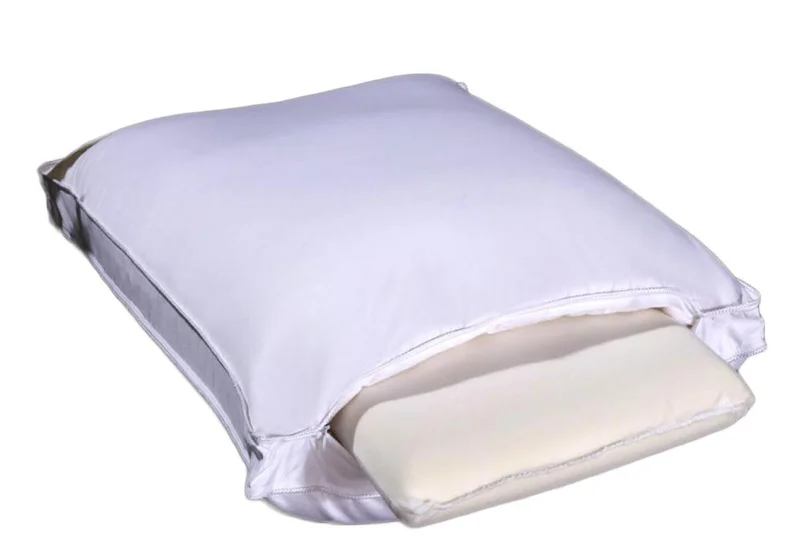 1Removable foam coreEgyptian Linens adjustable duck-down pillow, Standard/QueenEgyptian Linens adjustable duck-down pillow, Standard/Queen
- 20 × 28 inches
- 50% white duck down, 50% feather fill
- Removable memory-foam core
- Keep in mind:Contains down and feathers; dry cleaning recommended.
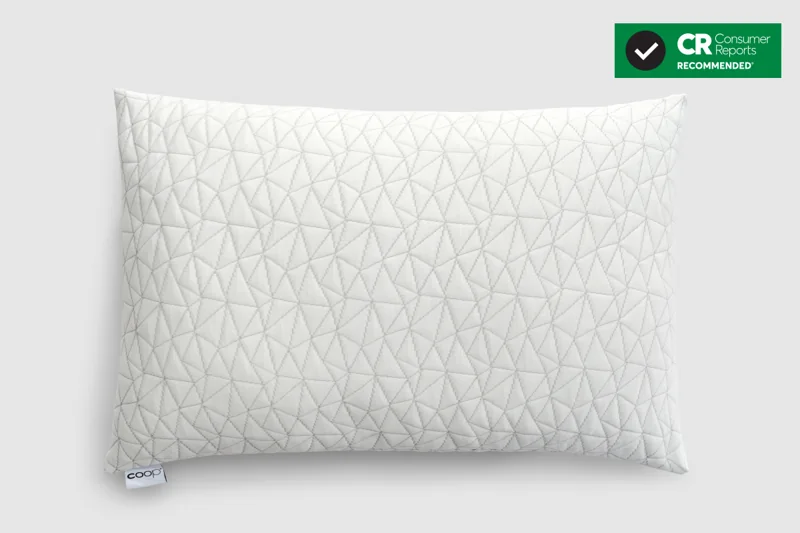 2Fine loose-fill adjustmentCoop Original adjustable pillow, Classic KingCoop Original adjustable pillow, Classic King
- Cross-cut memory foam and microfiber
- Loose filling can be added or removed
- Classic King: 19 × 35 inches
- Keep in mind:King Classic is 19 × 35 inches on the current maker chart; confirm case fit.
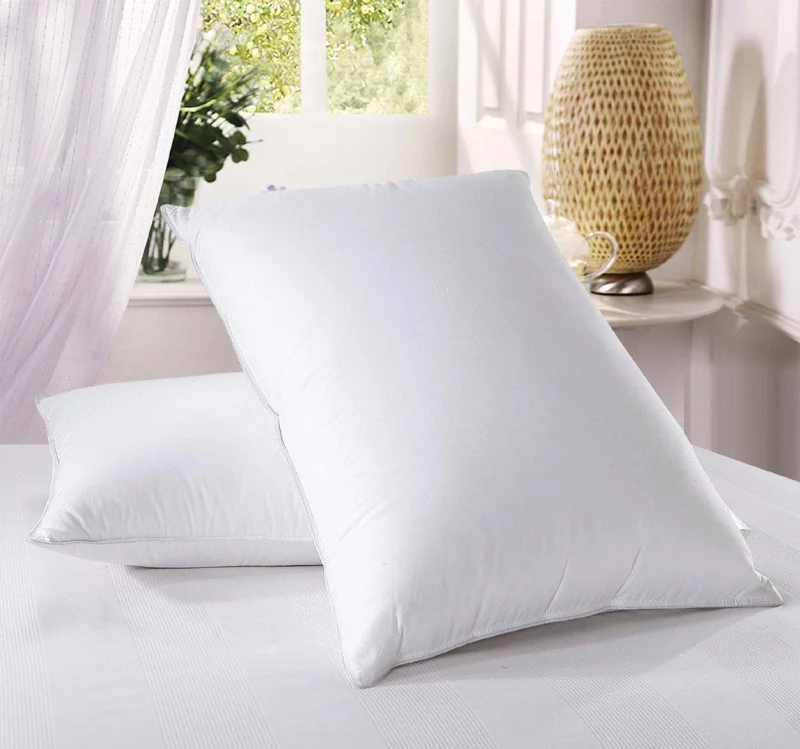 3Firm down-fill optionEgyptian Linens 500 down pillow, Standard/Queen firmEgyptian Linens 500 down pillow, Standard/Queen firm
- 20 × 28 inches
- Cotton shell; white down fill
- 42 ounces of down
- Keep in mind:Fixed down fill; dry cleaning recommended, no loaded-height measurement.
Compare a removable foam core, loose-fill adjustment and fixed firm down. Your mattress and shoulder position affect the useful height; none of these labels guarantees alignment or pain relief.
We compared the selected maker specifications, variant sizes and care requirements.
#1. Egyptian Linens adjustable duck-down pillow, Standard/Queen: Removable foam core
Egyptian Linens adjustable duck-down pillow, Standard/Queen Egyptian Linens adjustable duck-down pillow, Standard/Queen
Our verdict:
Removable foam core
The cotton-covered 20 × 28-inch pillow combines 50% white duck down and 50% feathers around a removable memory-foam core.
Keep in mind: Contains down and feathers; dry cleaning recommended.
Check price at Egyptian Linens- 20 × 28 inches
- 50% white duck down, 50% feather fill
- Removable memory-foam core
The cotton-covered 20 × 28-inch pillow combines 50% white duck down and 50% feathers around a removable memory-foam core. Removing the whole core changes the configuration; it is not a fine-grained loose-fill control. The maker describes medium-to-firm support and recommends dry cleaning. That firmness label does not establish the loaded height on your mattress.
#2. Coop Original adjustable pillow, Classic King: Fine loose-fill adjustment
Coop Original adjustable pillow, Classic King Coop Original adjustable pillow, Classic King
Our verdict:
Fine loose-fill adjustment
Choose the Coop Classic King if you need small changes to the amount of loose fill.
Keep in mind: King Classic is 19 × 35 inches on the current maker chart; confirm case fit.
View at Coop Sleep Goods- Cross-cut memory foam and microfiber
- Loose filling can be added or removed
- Classic King: 19 × 35 inches
Choose the Coop Classic King if you need small changes to the amount of loose fill. Its cross-cut memory-foam and microfiber filling can be added or removed, unlike a pillow whose whole inner section comes out. The current maker size chart gives 19 × 35 inches for Classic King; do not substitute the Crescent or Cut-Out model. Follow the separate instructions for the outer cover and filled pillow.
#3. Egyptian Linens 500 down pillow, Standard/Queen firm: Firm down-fill option
Egyptian Linens 500 down pillow, Standard/Queen firm Egyptian Linens 500 down pillow, Standard/Queen firm
Our verdict:
Firm down-fill option
This is the firm Standard/Queen variant, measuring 20 × 28 inches with 42 ounces of white down and a cotton shell.
Keep in mind: Fixed down fill; dry cleaning recommended, no loaded-height measurement.
Check price at Egyptian Linens- 20 × 28 inches
- Cotton shell; white down fill
- 42 ounces of down
This is the firm Standard/Queen variant, measuring 20 × 28 inches with 42 ounces of white down and a cotton shell. Its firm label distinguishes the variant within this range; it is not a standardized comparison with another brand. The filling is fixed, and the merchant recommends dry cleaning. Choose a pillowcase for the stated dimensions, not a generic Queen assumption.
Factors to consider when choosing the best pillows for side sleepers
Describe your present pillow before choosing another
Start with a pillow you know. Say what you want to keep and what you want to change. You may like its size but dislike how full it feels. Or the fill may be familiar while its case feels wrong. Those are separate reasons to shop.
Write the reason in plain words before reading product claims. A wish for less fill points to a different feature from a wish for a shorter pillow. Your notes do not need a comfort score. They need enough detail to tell you why a new item belongs on the bed.
If the present pillow still serves you, a purchase may not be needed. This guide does not set an age at which all pillows must be replaced. Nor does it establish that a new model will improve the way you sleep. Choose to replace a specific feature you can name.
Decide whether you want to manage loose fill
Coop gives you direct access to a loose blend. You can remove some or add from the spare fill. That suits a buyer who wants small changes and is willing to keep track of them. It also means keeping unused material clean and dry.
Think about where that material will go before you open the pillow. Use a closed bag or container you can identify later. Keep it with the item's care details. Do not mix it with loose fill from a different product and then assume the blend is unchanged.
A fixed pillow may be easier for your own routine if you dislike this task. Easier here means fewer fill decisions for you to manage. It does not mean that fixed fill has a proven comfort advantage or that adjustable fill is required for side sleeping.
Read a fixed feel label as that maker's description
Check that the selected size and feel are both the ones you want. A product page may offer other versions, and a photograph can look much the same across them. The link here identifies one king medium/firm item. Do not carry its facts over to an unverified variant.
If you want to change the amount of fill yourself, this fixed model is a different choice. Its label should not be treated as a promise that you will like it in every case or bed setup. The useful fact is the build you will receive.
Understand the two-part choice before calling it adjustable
Loose-fill adjustment, taking out a whole inner pillow, and removing a foam core are different tasks. Use the mechanism named on the selected card. Change one setting at a time, then check it in the positions you use; none of these pillows adjusts itself during the night.
Do not divide the printed full height in half to guess the outer section's height. We do not have a verified figure for that arrangement here. Nor do we claim the two states cover every height a side sleeper may prefer. Read the feature as a discrete change of build.
This can suit someone who wants one clear change rather than a bag of spare fill. It may be less useful if you want to tune the amount in small steps. That is a choice about how you want to use the pillow, rather than a claim about which design is best for all adults.
Keep an unloaded height separate from your own preference
A pillow can have a stated height when no one rests on it. That number does not tell us the shape you will prefer under load. The fills in these three products differ.
Do not choose a target from a shoulder-width formula supplied by this guide; we do not supply one. Your body size and the word side sleeper do not let us calculate an exact product setting. A measured preference on your own bed is still a personal observation.
If you record a pillow's uncompressed size at home, label it as that. Keep it apart from a note about how the pillow felt in use. Both records can be useful, but they answer different questions. Calling one a measurement does not turn the other into a test result.
Check the footprint with the case you own
The selected Standard/Queen Egyptian Linens pillows measure 20 × 28 inches. The Coop Classic King is 19 × 35 inches on its current maker chart. Match the case to the actual selected pillow rather than treating Standard, Queen and King names as universal dimensions.
Read the case's own dimensions and opening style. Standard and king are names, rather than a complete fit check. A case with an envelope opening also needs room for that closure to work as intended. Do not assume a sheet set's included cases match a pillow you have chosen separately.
Changing the fill does not change a king shell into a standard shell. If you want a shorter footprint on the bed, choose by actual size as well as feel. A pillow that fits the bed layout on paper can still require a different case from the one in your drawer.
Choose a case before judging several fill changes
Use the case you plan to keep on the pillow. A case is part of the setup you are judging, so record a case change as a separate change.
If the case is hard to close or the shape looks wrong, check the size first. Do not cut a pillow or force its closure to make a mismatch disappear. Read the pillow and case labels side by side. Choose a suitable case before drawing a conclusion about the product's fill.
This matters when comparing your old standard pillow with a new king. A new case and a longer footprint arrive together. Note that you changed both, rather than crediting every difference to the fill. Your record will be clearer if you later decide to return to the old size.
Make one reversible change at a time
With Coop, start with one fill change you can undo. Keep the removed material apart and note what you did in your own words. We do not prescribe a quantity for side sleepers. Give yourself a clear way back to the last arrangement before making another change.
Egyptian Linens adjustable duck-down pillow, Standard/Queen lists 20 × 28 inches; 50% white duck down, 50% feather fill; Removable memory-foam core. Contains down and feathers; dry cleaning recommended.
Treat a different bed as a new setup
The same pillow may be used on more than one bed. Record which bed you used when writing your preference notes. We do not predict a fixed change in pillow height from a mattress's feel label. There is no formula here that converts a bed description into a required fill amount.
If you move the pillow from a main room to a guest room, keep that move in the record. The case and bedding may change too. A preference from one setup is still useful, but it is not proof of a result on all beds. Judge the actual arrangement you intend to keep.
This also helps if you share a home with someone who likes the same pillow model. They may use a different bed or case. Their preference can help you name features to consider, but it cannot establish your own fit. Each person can make a separate choice without declaring one of them wrong.
Plan care for each part you will wash
Find the care label for the filled pillow as well as any removable cover. A cover that comes off does not by itself establish a washing route for every part inside it. Read the exact model instructions. Do not borrow a cycle from a different pillow with a similar-looking shell.
Read the outer-cover and filled-core care separately. The selected down pillow recommends dry cleaning; a washable cover never makes every inner material washable.
Check your machine's instructions too. We do not provide a load count or a drying time without the relevant details. If the care task does not fit your routine or equipment, resolve that before buying. A pillow's listed features matter less if you cannot follow its own care route.
Keep fill storage distinct from ready-to-use bedding
Store only clean, dry parts as their labels permit. Do not give a fixed drying time in place of checking the actual item. Keep care details with the stored pieces so they are available when you need them again. This is a record and storage task, without a promised effect on product life.
If you later stop using the pillow, retain enough information to know which parts belong together. A spare inner section is not a verified replacement part for another model. Loose fill from one product is not automatically suitable for a different pillow. Ask the maker before treating either as interchangeable.
Separate a cooling name from the feature you are buying
The joined pillow options state cotton shells. Their fillings differ: the 2-in-1 has down-alternative filling, the adjustable duck-down model has down and feathers around a removable foam core, and the fixed-down range has white down. Use only the fill description for the variant actually selected on this page.
The selected adjustable and fixed-down pillows have cotton shells, while Coop uses its own foam-and-microfiber filling. Neither a shell fiber nor a fill blend establishes an overnight cooling result.
If heat is your main reason to replace a pillow, keep that unanswered question in view. Do not substitute a claim about the cover for a test of the full pillow. You can still choose a fabric or a care route you prefer. State that reason plainly instead of making an unsupported heat prediction.
Keep your choice separate from a partner's choice
Two adults who both sleep on their sides need not buy the same pillow. One may want loose-fill control while the other wants a fixed build. Agreeing on a case color does not require the same item inside it. Keep each person's stated preference in a separate note.
If you order two items, confirm the size and variant on each order line. A pair is not necessarily included just because a room photograph shows two pillows. The product details here describe the selected items, rather than a promised pair in every pack. Check the actual quantity before checkout.
When both pillows arrive, keep their labels easy to distinguish. Do not swap fill or inner sections to make two unlike products match. If you later exchange preferences, move the whole identified item. That keeps the care and build details connected to the right pillow.
Use a guest's preference as a choice, not a rule
A guest who sleeps on their side may simply want a different feel from the pillow already on the bed. Ask what they want to change in plain terms. More or less fullness is a clearer starting point than a promise that one position needs one model.
If you offer a second clean pillow, explain the actual choice. One can be the fixed item; another can be an adjustable pillow that you have already prepared. Do not expect a guest to manage loose fill without knowing how the product works. Keep spare parts out of the ready-to-use pile.
The host's own preference does not establish a result for the guest. Neither does a hotel-style bed photograph. Choose a case that fits each actual pillow and keep the care record with the household's bedding notes. More choices are useful only if people can tell what those choices are.
Compare travel needs with the size of the selected item
These are bed pillows, with two selected king options and one standard option. We do not identify them as compact travel pillows. If you plan to take one away, compare the actual footprint with the space you have. Do not assume that removing fill makes a king shell into a smaller product.
Keep the exact care details available on the trip. A different washing machine does not make a label's limits disappear. If portability is the main task, check that task before selecting a large bed format.
Work through a buyer who wants loose-fill control
Imagine an adult who likes the size of a king pillow but wants to make small fill changes. They already have a case they intend to use. This is a hypothetical shopping example, rather than a report from a tested sleeper. Their reason to consider Coop is its loose-fill feature.
They check the current maker chart, notice the catalog size conflict and plan to verify the delivered label. They also find a closed container for the spare fill. These steps answer practical questions before they start judging feel. They do not establish a correct sleeping height.
Once the item is dressed in the intended case, they make one change that they can reverse. They keep the removed material and a short note. If they dislike the result, the last setting is still available. The value of the design for this buyer is that control, without a guaranteed comfort result.
This example does not make Coop the required choice for every side sleeper. A buyer who dislikes storing loose material may prefer a different build. The same feature can be useful to one person and a chore to another. Keep the task you are willing to do at the center of the choice.
Work through a buyer who wants a fixed king pillow
For the selected firm down pillow, compare its 20 × 28-inch dimensions with the case and plan for the recommended dry cleaning. A firm label is not a shared height or temperature test.
This buyer has made a narrow choice: a fixed king in the stated feel option. They have not proved that its firmness word equals another brand's word. They have not calculated an exact height for their body. That is enough to explain the purchase reason without inventing a performance award.
If they later decide they want fine fill changes, that is a different task from the one they first named. They can revisit the construction choice. Cutting into the fixed pillow would not turn it into the verified loose-fill design compared here. Select the feature at purchase instead.
Work through a buyer who wants a smaller two-part pillow
They compare the stated 18 x 26-inch size with the actual case. They read the care details for both sections. They keep the inner pillow even if they first prefer the outer alone. This avoids losing the part that lets them return to the full arrangement.
They do not assume that taking out one section gives half the printed height. No verified outer-only height is supplied here. Their choice is the two-part build, rather than a known loaded-height setting. That distinction keeps the reason for the purchase clear.
The same adult may later use the full pillow on another bed. They can note that new setup separately. Their own observation can guide what they keep using, without becoming a promise for another buyer. A choice that can be described clearly is more useful than an untested universal rule.
Check the order before you buy new cases
Read the selected model and size on the order line. Compare it with the facts used in your decision. A brand can sell several pillow ranges with similar names. Do not assume a different version has the same fill access, parts or care as the item linked here.
Confirm the quantity as well. If two adults want different sizes, order each exact variant rather than using a room photograph as a pack list. Wait for the label check before buying a large stock of new cases. The delivered item is the one the cases must fit.
Coop Original adjustable pillow, Classic King lists Cross-cut memory foam and microfiber; Loose filling can be added or removed; Classic King: 19 × 35 inches. King Classic is 19 × 35 inches on the current maker chart; confirm case fit.
Inspect the delivered item before changing it
Check the label against what you ordered. Read the care route before washing or opening any fill access. A sealed pack and a familiar logo do not establish that the selected variant is correct. Keep the order details available while you inspect the actual item.
If something differs, contact the seller through its stated route. We do not supply a universal return period or claim that all used pillows can be returned. Read the terms that apply to the exact purchase before taking steps that may matter to that policy. Do not infer those terms from a brand name.
Only after the item is identified should you begin the intended adjustment. Keep removed parts and spare fill linked to that item. This makes later care and preference notes easier to follow. It also prevents a wrong-variant question from being buried beneath a series of changes.
Save the care record when a label becomes hard to read
Keep a copy of the exact item's care details while the label is clear. A photo of your own label can help you read it later. That is a household record, rather than evidence that a later version of the product has the same care. Check a new item afresh even when its name looks familiar.
If you can no longer identify which parts belong to a stored pillow, ask the maker before using a care route from memory. Do not assume all polyester fills or all foam blends have one washing method. Identifying the item is the first task; choosing a cycle comes after that.
Keep a short record that helps your next choice
Record the model and size as printed on the item. Add the case you used and the bed where you used it. Then write one clear preference: perhaps you want less fill, or perhaps you want to keep the fixed build. You do not need to give every feature a score.
Keep observations separate from claims. You can say what you preferred without saying that the pillow improves sleep for all side sleepers. You can record a care task without claiming it extends the product's life. Plain, narrow notes are easier to trust when you read them months later.
If the new pillow does not solve the task you named, revisit that task before buying another model. The case or footprint may be the part you meant to change. A clearer question can be more useful than another unsupported best-pillow claim. This shortlist is a way to compare choices, not a diagnosis.
How we picked these pillows
Compare a removable foam core, loose-fill adjustment and fixed firm down. Your mattress and shoulder position affect the useful height; none of these labels guarantees alignment or pain relief.
The recommendation is therefore conditional on the task you want to do. Match the exact size to your case, read the care route and decide whether you want to manage spare fill or parts. If your current pillow already meets those needs, these specifications alone do not show a reason to replace it.
More in this guide
Frequently asked questions
Can you provide a review of the Coop side sleeper pillow?
Coop’s current maker chart lists Classic King at 19 × 35 inches. Use that chart for the selected Classic variant, and keep the delivered label with your case measurements. No shared loaded-height test is available.
Is it better for a pillow to be too high or too low?
Neither choice supplies a useful target for everyone. A stated uncompressed height is different from the height you prefer under load. Compare your current pillow, the case and the adjustment feature you want. We do not prescribe a height from a sleep-position label.