
3 Best Pillows for Back Sleepers in 2026
We may earn a commission from some links on this page.

The short answer
Choose fixed medium down if you prefer a finished feel, an inner-pillow design for two whole-pillow settings, or Coop for smaller loose-fill changes. No published uncompressed size guarantees the loaded height your neck needs.
Egyptian Linens 500 down pillow, Standard/Queen medium
Fixed down fill; dry cleaning recommended, no loaded-height measurement.
Last updated October 31, 2026
Contents20
- #1. Egyptian Linens 500 down pillow, Standard/Queen medium: Medium down-fill option
- #2. Abripedic 2-in-1 pillow, Standard/Queen: Removable inner pillow
- #3. Coop Original adjustable pillow, Classic King: Fine loose-fill adjustment
- Factors to consider when choosing the best pillows for back sleepers
- Measure your current pillow and pillowcase
- Understanding pillow height and loft for back sleepers
- Assessing pillow firmness for back sleeping
- Adjustable fill versus fixed fill for back sleepers
- Considering pillow material types for back sleepers
- Matching pillow size to your bed and preferences
- Understanding cover materials and pillow durability
- Care and maintenance for back sleeper pillows
- Considering partner preferences for pillows
- When to replace your pillow
- One change at a time: optimizing your sleep setup
- Recording your preferences for future pillow choices
- How we picked the best pillows for back sleepers
- More in this guide
- Frequently asked questions
- Verdict on best pillows for back sleepers
Our top 3 picks: best pillows for back sleepers
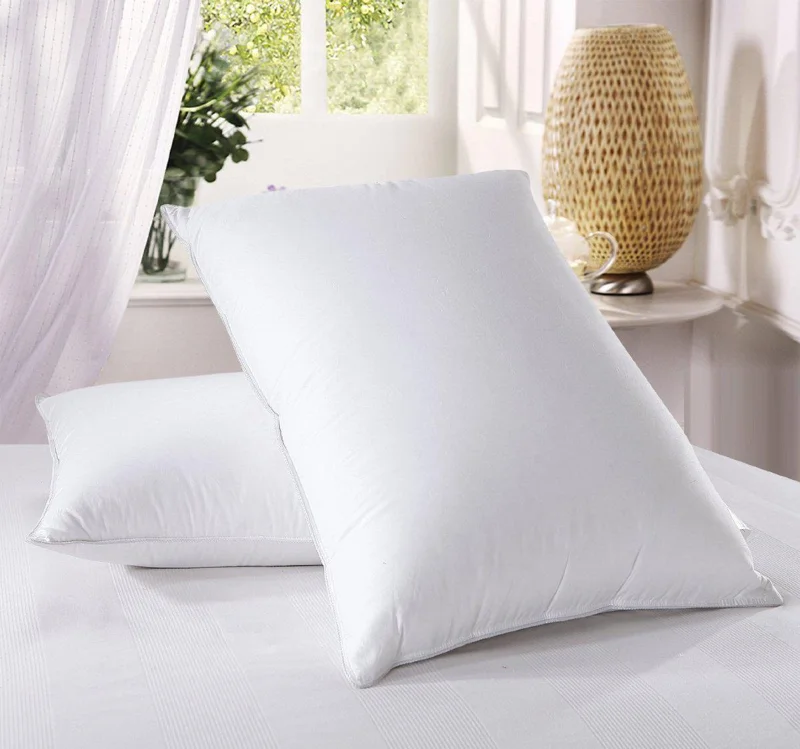 1Medium down-fill optionEgyptian Linens 500 down pillow, Standard/Queen mediumEgyptian Linens 500 down pillow, Standard/Queen medium
- 20 × 28 inches
- Cotton shell; white down fill
- 33 ounces of down
- Keep in mind:Fixed down fill; dry cleaning recommended, no loaded-height measurement.
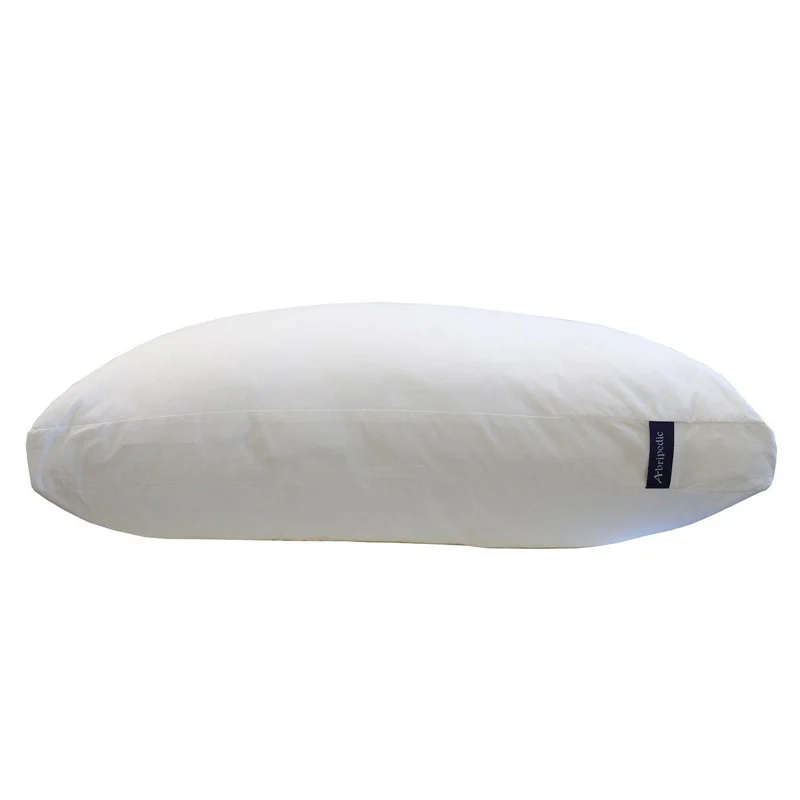 2Removable inner pillowAbripedic 2-in-1 pillow, Standard/QueenAbripedic 2-in-1 pillow, Standard/Queen
- 20 × 28 inches
- Cotton shell; down-alternative filling
- Zipped cover and removable inner pillow
- Keep in mind:Two whole-pillow settings; no loose-fill adjustment.
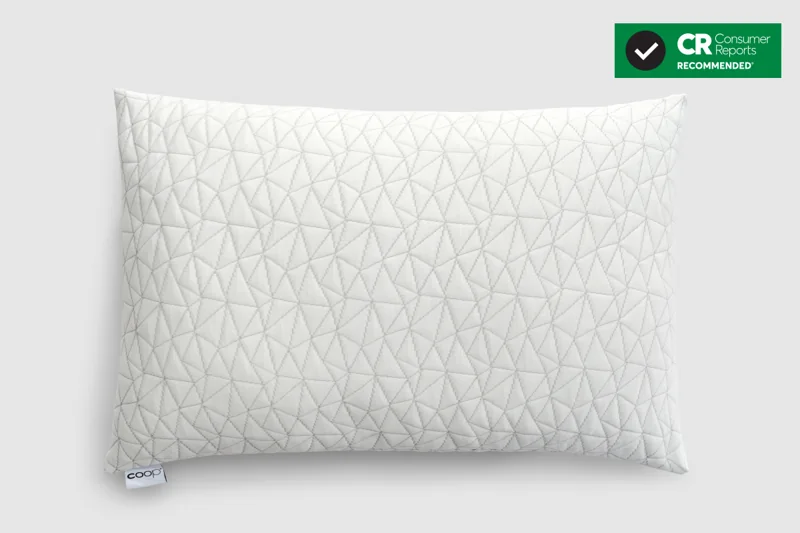 3Fine loose-fill adjustmentCoop Original adjustable pillow, Classic KingCoop Original adjustable pillow, Classic King
- Cross-cut memory foam and microfiber
- Loose filling can be added or removed
- Classic King: 19 × 35 inches
- Keep in mind:King Classic is 19 × 35 inches on the current maker chart; confirm case fit.
Choose fixed medium down if you prefer a finished feel, an inner-pillow design for two whole-pillow settings, or Coop for smaller loose-fill changes. No published uncompressed size guarantees the loaded height your neck needs.
We compared the selected maker specifications, variant sizes and care requirements.
#1. Egyptian Linens 500 down pillow, Standard/Queen medium: Medium down-fill option
Egyptian Linens 500 down pillow, Standard/Queen medium Egyptian Linens 500 down pillow, Standard/Queen medium
Our verdict:
Medium down-fill option
This is the medium Standard/Queen variant, measuring 20 × 28 inches with 33 ounces of white down and a cotton shell.
Keep in mind: Fixed down fill; dry cleaning recommended, no loaded-height measurement.
Check price at Egyptian Linens- 20 × 28 inches
- Cotton shell; white down fill
- 33 ounces of down
This is the medium Standard/Queen variant, measuring 20 × 28 inches with 33 ounces of white down and a cotton shell. Its medium label distinguishes the variant within this range; it is not a standardized comparison with another brand. The filling is fixed, and the merchant recommends dry cleaning. Choose a pillowcase for the stated dimensions, not a generic Queen assumption.
#2. Abripedic 2-in-1 pillow, Standard/Queen: Removable inner pillow
Abripedic 2-in-1 pillow, Standard/Queen Abripedic 2-in-1 pillow, Standard/Queen
Our verdict:
Removable inner pillow
This 20 × 28-inch pillow has a cotton shell and down-alternative filling.
Keep in mind: Two whole-pillow settings; no loose-fill adjustment.
Check price at Egyptian Linens- 20 × 28 inches
- Cotton shell; down-alternative filling
- Zipped cover and removable inner pillow
This 20 × 28-inch pillow has a cotton shell and down-alternative filling. Unzip it to remove the inner pillow for the softer configuration, or keep both parts together for the fuller configuration. That is a choice between two whole-pillow settings, rather than a loose-fill adjustment. Confirm the delivered care label; the current product text does not supply a complete washing procedure.
#3. Coop Original adjustable pillow, Classic King: Fine loose-fill adjustment
Coop Original adjustable pillow, Classic King Coop Original adjustable pillow, Classic King
Our verdict:
Fine loose-fill adjustment
Choose the Coop Classic King if you need small changes to the amount of loose fill.
Keep in mind: King Classic is 19 × 35 inches on the current maker chart; confirm case fit.
View at Coop Sleep Goods- Cross-cut memory foam and microfiber
- Loose filling can be added or removed
- Classic King: 19 × 35 inches
Choose the Coop Classic King if you need small changes to the amount of loose fill. Its cross-cut memory-foam and microfiber filling can be added or removed, unlike a pillow whose whole inner section comes out. The current maker size chart gives 19 × 35 inches for Classic King; do not substitute the Crescent or Cut-Out model. Follow the separate instructions for the outer cover and filled pillow.
Factors to consider when choosing the best pillows for back sleepers
Back sleepers need specific head and neck alignment. Your pillow should fill the gap between your neck and the mattress. This keeps your head level with your spine. Avoid pillows that push your head too far forward.
Also, avoid pillows that let your head drop too far back. Both positions can strain your neck. Proper alignment promotes comfort.
Consider your mattress firmness. A softer mattress allows your body to sink more. This can reduce the gap between your neck and the mattress. You may need a thinner pillow with a softer mattress.
A firmer mattress keeps your body more on the surface. This creates a larger gap. You might need a thicker pillow for a firmer mattress. Test different heights based on your mattress.
Your body size also affects pillow needs. A person with broader shoulders might need a slightly thicker pillow. This helps maintain head alignment. A person with narrower shoulders may prefer a thinner pillow.
Pay attention to how your head feels supported. The goal is a neutral spine position from your shoulders to your head.
Pillow material affects its feel and support. Memory foam can conform to your shape. Down-alternative offers a softer, more pliable feel. Some pillows have adjustable fill.
This allows you to change the fill amount. Fixed-fill pillows have no fill setting to change at home. That difference does not establish how either design will support your head.
Measure your current pillow and pillowcase
Before buying a new pillow, measure your current one. Write down its width and length. Record the height with no load too. Measure the inside of your pillowcases; size names are not always exact.
A 'standard' pillow can vary by an inch or two. This affects how it fits in your case. A poorly fitting case can make a good pillow feel wrong.
Check your pillowcase's width and length. A pillow that is too wide will bunch up in the case. This creates an uneven sleeping surface. A pillow that is too narrow will shift inside the case.
This can reduce support. Match the pillow dimensions to your case dimensions closely. This ensures a smooth, supportive surface.
Measure the depth of your pillowcase opening. Some pillowcases have a wider opening than others. A very thick pillow might be hard to fit into a narrow opening. This can damage the pillow or the case.
Ensure your pillowcase can accommodate the new pillow's volume. Look for cases labeled 'deep pocket' if your pillow is very full.
Record these measurements. Keep them handy when shopping for a new pillow. Do not rely solely on size names like 'king' or 'standard'. These names are general guides.
Actual dimensions can vary between manufacturers. Use your own measurements as the primary guide for selection.
Understanding pillow height and loft for back sleepers
Pillow height, or loft, is critical for back sleepers. Too high, and your head pushes forward. This strains your neck. Too low, and your head drops back.
This also strains your neck. The ideal loft keeps your head level with your spine. This creates a straight line from your ears to your shoulders.
Compare how the pillow feels when you lie down with your usual case. Note whether it feels too full or leaves you wanting more height. Change only one setting at a time if the fill is adjustable. This is a comfort check, rather than a clinical test of alignment.
Pillow loft can be static or dynamic. Static loft is the uncompressed height of the pillow. Dynamic loft is the height when your head rests on it. Your head's weight compresses the pillow.
Different fill materials compress differently. A firmer pillow compresses less. A softer pillow compresses more. Focus on the dynamic loft when assessing comfort.
Adjustable pillows allow you to control loft. They often contain loose fill that you can add or remove. This is useful if you are unsure of your ideal height. Fixed-fill pillows have a set loft.
These are suitable if you know your preferred height. Consider if you need the flexibility of adjustable fill.
Assessing pillow firmness for back sleeping
Pillow firmness affects support. For back sleepers, a medium firmness is often suggested. This provides enough resistance to keep your head aligned. It also offers enough give for comfort.
Too firm, and it can feel like your head is propped up unnaturally. Too soft, and your head may sink too much.
Your body weight influences firmness perception. A heavier head will compress a pillow more. A lighter head will compress it less. What feels medium to one person might feel firm or soft to another.
Consider how your body interacts with the pillow. It is about how much resistance the pillow provides under your head.
Firmness works with loft to create support. A firm pillow with low loft can support your neck well. A soft pillow with high loft might still allow your head to sink too far. These two factors work together.
Do not evaluate firmness in isolation. Consider the combined effect on your head and neck position.
Manufacturer descriptions like 'medium-firm' are general. They provide a starting point. Your personal preference is the final guide. If you prefer a very soft feel, ensure it still provides adequate support.
If you like a very firm feel, make sure it does not create pressure points.
Adjustable fill versus fixed fill for back sleepers
Adjustable fill pillows allow precise customization. They contain loose material like shredded foam or fiberfill. You can add or remove this fill to change the pillow's height and firmness. This is ideal if you are unsure of your exact needs.
It lets you fine-tune the pillow over time. Your preferences might change with a new mattress or age.
To adjust, simply unzip the cover and inner liner. Remove a small amount of fill. Lie down and test the new height. Repeat until it feels right.
Keep the extra fill in a sealed bag. This prevents dust and keeps it ready if you need a fuller pillow later. This process can be iterative and may take a few nights.
Loose-fill adjustment, taking out a whole inner pillow, and removing a foam core are different tasks. Use the mechanism named on the selected card. Change one setting at a time, then check it in the positions you use; none of these pillows adjusts itself during the night.
These pillows are often easier to maintain. They do not require handling loose fill. They are ready to use out of the package.
Consider your willingness to handle fill. Adjustable fill gives you an amount to change. Fixed fill removes that task and that setting. Neither design has a measured support result in this comparison.
The choice depends on your preference for customization.
Considering pillow material types for back sleepers
The Coop pick uses cross-cut memory foam with microfiber. Its loose-fill design lets you add or remove material. This is the stated difference we can compare.
None of these picks is a latex pillow. If you already prefer latex, these products do not provide a direct replacement on material alone. Check the composition rather than treating any foam as the same thing. A material name does not establish an allergy or dust-mite benefit.
Each material has different characteristics. Memory foam may feel warm to some users. Down-alternative can sometimes flatten over time. Latex can have a unique odor when new.
Consider what feel you prefer. Also, think about any sensitivities you might have to certain materials.
Matching pillow size to your bed and preferences
Pillow sizes typically correspond to bed sizes. Standard pillows (around 20x26 inches) fit well on twin or full beds. Two standard pillows fit across a queen bed. Two king pillows (around 20x36 inches) fit across a king or California king bed.
This ensures the pillows look proportionate on your bed.
Consider how many pillows you use. Some people prefer one pillow for sleeping. Others use two, one for support and one for decorative purposes. Ensure your chosen pillow size leaves enough space on the bed.
You should have room for comfort without feeling crowded.
Pillow size also impacts how you sleep. A wider king pillow gives more room to shift. A standard pillow keeps your head more contained. If you tend to move your head a lot while back sleeping, a larger pillow might be more comfortable.
If you stay in one spot, a standard pillow works well.
Use the pillow-size guide to check the footprint you want. King is a length choice, rather than a level of support. A standard pillow can be used on a larger bed if that is the size you prefer. Your bed's size does not force you to choose the longest pillow.
Understanding cover materials and pillow durability
The joined pillow options state cotton shells. Their fillings differ: the 2-in-1 has down-alternative filling, the adjustable duck-down model has down and feathers around a removable foam core, and the fixed-down range has white down. Use only the fill description for the variant actually selected on this page.
Cover composition and filling are separate facts. Read the exact selected shell, filling and care label without treating a coating or wrinkle claim as a measured sleep result.
The cover material can affect breathability. A tightly woven cover might trap heat. A more open weave allows better airflow. Consider your personal preference for temperature regulation.
Do not expect a cover material to solve any heat issues. It is one factor among many.
Durability is also linked to cover quality. A well-made cover will protect the fill for longer. Look for strong stitching and good zipper quality if applicable. A removable, washable cover is also a plus for hygiene.
This extends the life of the entire pillow.
The pillow's internal construction also impacts durability. High-quality fill materials resist clumping and flattening. A robust inner liner prevents fill from escaping. Read manufacturer descriptions about construction.
These details suggest how long the pillow might maintain its shape and support.
Care and maintenance for back sleeper pillows
Proper care extends your pillow's life. Always check the care label on your pillow. Some pillows are fully machine washable. Others have removable covers that can be washed.
Some may require spot cleaning or professional cleaning. Following these instructions prevents damage.
For machine-washable pillows, use a gentle cycle with cold water. Use a mild detergent. Avoid harsh chemicals like bleach. Over-washing can break down fill materials.
Wash your pillow only when necessary, typically every few months or as recommended by the manufacturer.
Drying is also important. Many pillows require low heat tumble drying. Some may need to be air-dried flat. High heat can damage foam or synthetic fibers.
Ensure the pillow is completely dry before using it. Dampness can lead to mold or mildew growth.
Fluffing your pillow regularly helps maintain its shape. This is especially true for down, down-alternative, and shredded fills. Fluffing redistributes the fill. It helps prevent permanent indentations.
This simple step can keep your pillow supportive for longer. Keep extra fill in a sealed bag if applicable.
Considering partner preferences for pillows
If you share a bed, your partner's pillow needs might differ. They may have a different sleeping position or preferred firmness. What works for one back sleeper might not work for another. Each person should have their own pillow suited to their individual needs.
Do not force one pillow type on both.
Discuss pillow preferences with your partner. Try out different pillow types if needed. A common compromise is not always the best solution. Allowing each person to choose their ideal pillow ensures comfort for both.
This can contribute to better sleep for everyone.
Pillow size can also be a factor. Two king pillows fit perfectly across a king bed. This can look harmonious. However, if one partner prefers a standard pillow, that is fine.
The priority is comfort and support over visual symmetry. Prioritize function over aesthetics.
If one partner is a back sleeper and the other is a side sleeper, their pillow needs will be very different. Back sleepers generally need lower loft. Side sleepers often need higher loft. Respect these differences when making selections.
Each person's pillow is their personal choice.
When to replace your pillow
Check condition rather than assigning every fill the same replacement date. Inspect the seams and cover. Note lasting changes in feel, lumps or damage. Our replacement guide separates care from the decision to buy a new pillow.
Do not use a fold test as a universal rule for foam and fiber pillows. Different constructions behave differently when bent. Follow the maker's handling advice and compare the pillow with its own earlier condition. A change you can describe is more useful than an unsupported pass or fail.
Check for odors or stains that do not wash out. These can be signs of mildew or accumulated allergens. Even with regular washing, pillows absorb oils and sweat. If your pillow consistently smells or looks dirty, consider replacing it.
A fresh pillow contributes to a cleaner sleep environment.
Discomfort alone does not identify its cause. This comparison cannot diagnose neck pain or show that buying a pillow will resolve it. You can record whether a pillow feels too high or too low. Keep that comfort observation separate from a medical conclusion.
One change at a time: optimizing your sleep setup
When changing your sleep setup, make one change at a time. If you buy a new pillow, use it for several nights before changing anything else. This helps you isolate the effect of the new pillow. You can better determine if it meets your needs.
Changing multiple items at once makes it hard to identify specific problems or improvements.
If you also get a new mattress, use your old pillow for a few nights first. Then introduce the new pillow. This helps you assess how each component interacts. A new mattress changes your body's sinkage.
This can alter your pillow needs. Evaluate each piece individually.
Keep your old pillow as a reference. If your new pillow does not feel right, you can switch back. This provides a baseline for comparison. It also gives you a backup while you adjust or look for alternatives.
Do not discard your old pillow immediately.
Read the current return conditions before trying a new pillow. Check whether opening, washing or removing fill affects those conditions. Keep the order details and label until you have checked the product. We do not ask you to keep using a pillow that feels wrong during an assumed adjustment period.
Recording your preferences for future pillow choices
Keep a record of what works and what does not. Note the dimensions of pillows you like. Write down the fill material and firmness. Include details about how your head feels supported.
This information is valuable for future purchases. It creates a personalized guide for your sleep needs.
Document the parts of a pillow you dislike. Note if it feels too high or too soft, and whether the feel changed over time. Keep the size and fill details beside these notes. That gives your next comparison a clear starting point.
Keep a short comfort diary if it helps you compare settings. Record the date and the change you made. Note your impressions without treating them as a controlled test. A diary cannot establish that the pillow caused a health or sleep outcome.
This record becomes a personal specification sheet. You can refer to it when shopping. It helps you articulate your needs to sales associates. It also makes online shopping more efficient.
You will know exactly what to look for in product descriptions.
How we picked the best pillows for back sleepers
We compared published specifications for each pillow. This includes stated dimensions, fill materials, and cover compositions. We looked at whether the fill is adjustable or fixed. We noted any special features described by the manufacturer, such as coatings or multi-layer designs.
These are direct comparisons of product claims.
We examined care instructions provided by the manufacturers. This includes details on washing and drying. We noted if the entire pillow is washable or just the cover. These details are important for maintenance and longevity.
We keep the source limits beside those facts.
We focused on features relevant to back sleepers. This includes the potential for loft adjustment and stated firmness levels. We acknowledge that firmness descriptions are subjective. Our comparison highlights the options available for different preferences.
We do not interpret these claims.
This comparison is based solely on manufacturer-provided data. Our analysis relies on the factual information presented in product listings and on brand websites. We aim to clarify what each product offers based on its specifications.
More in this guide
Frequently asked questions
What is the ideal pillow height for back sleepers?
There is no measured height in our evidence that fits every back sleeper. Shelf height differs from height under your head. Compare the feel of your current pillow before choosing fixed fill or an adjustable option.
Can I use a side sleeper pillow if I sometimes sleep on my back?
Side sleeper pillows are typically thicker and firmer to fill the gap between the head and shoulder. Using such a pillow while back sleeping can push your head too far forward. This can strain your neck. It is best to use a pillow designed for back sleeping.
If you switch positions often, consider a pillow designed for combination sleepers or one with adjustable fill.
How do I know if my pillow is too old for back sleeping?
Check for damage and lasting changes in the pillow itself. Compare the condition with the maker's care guidance. A fold test and a fixed age limit do not apply equally to every construction. Pain does not prove that the pillow is worn out or that a replacement will treat its cause.
Verdict on best pillows for back sleepers
The selected Standard/Queen Egyptian Linens pillows measure 20 × 28 inches. The Coop Classic King is 19 × 35 inches on its current maker chart. Match the case to the actual selected pillow rather than treating Standard, Queen and King names as universal dimensions.
Prioritize a pillow that keeps your head level with your spine. Always check care instructions. Your ideal pillow provides comfort and maintains proper alignment without causing strain. Make informed choices based on your specific preferences and needs.